
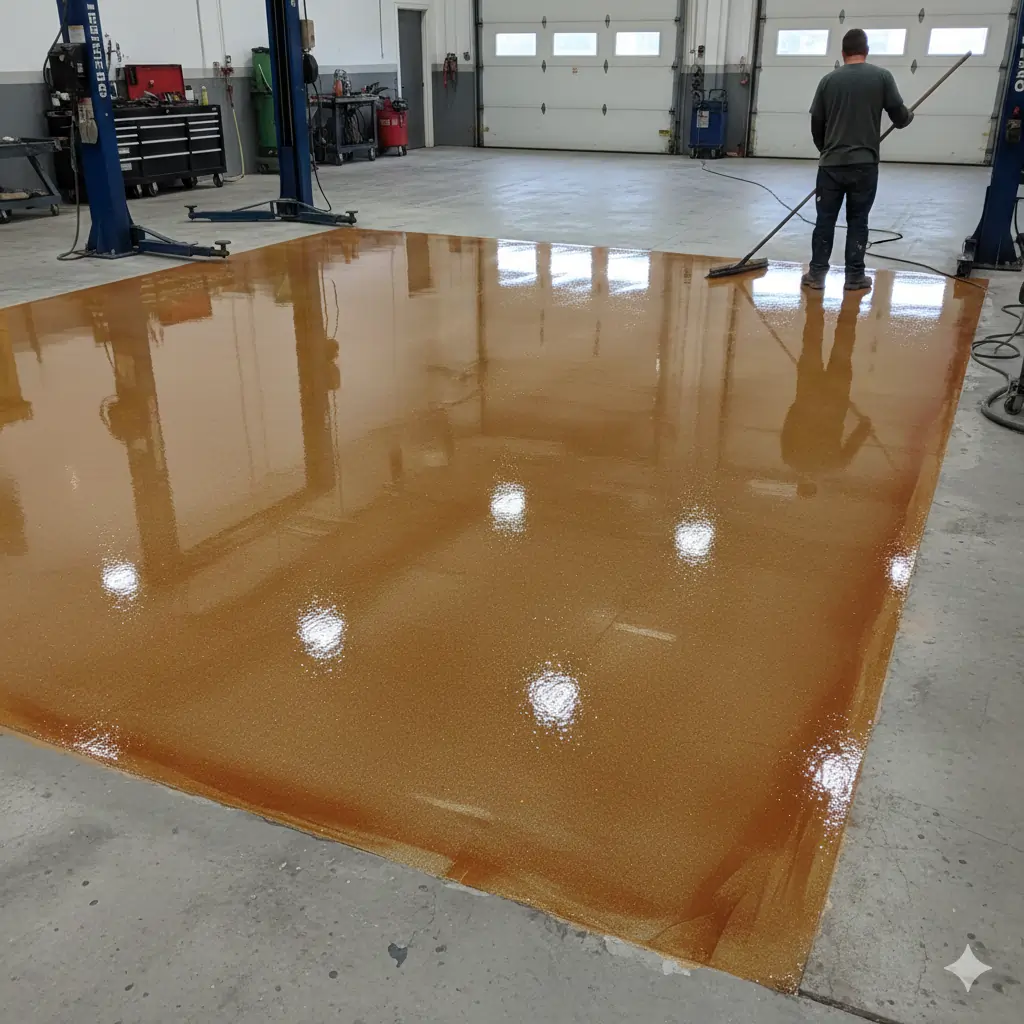
If you live in Phoenix, you already know our summers are no joke. When temperatures regularly climb past 110°F, your garage floor takes a real beating from the heat. That’s why regular concrete just doesn’t cut it here – you need a coating that’s specifically built for our desert climate.
At First Class Coatings, we specialize in polyaspartic floor coatings that are perfect for Phoenix conditions. We’ve been doing this for 34 years, and with over 11,000 installations across Arizona, we’ve learned exactly what works in the Valley and what doesn’t. Our coatings handle the intense sun, wild temperature changes, and everything else our climate throws at them.
What Is Polyaspartic Coating?
Think of polyaspartic coating as a super-protective shield for your concrete. It soaks deep into the surface and creates a bond that’s much stronger than traditional epoxy. Pretty cool that this technology was originally developed for bridges and highways—places where failure just isn’t an option. Now you can get that same level of durability for your garage or patio.
Here’s what really sets it apart: polyaspartic dries incredibly fast. You can walk on it in about 4-6 hours, and your car can be back in the garage the next day. Compare that to regular epoxy that needs a full week to cure properly. When you’re juggling Phoenix weather and just want your garage back, that quick turnaround makes a real difference.
Why Polyaspartic Flooring Works Great for Phoenix
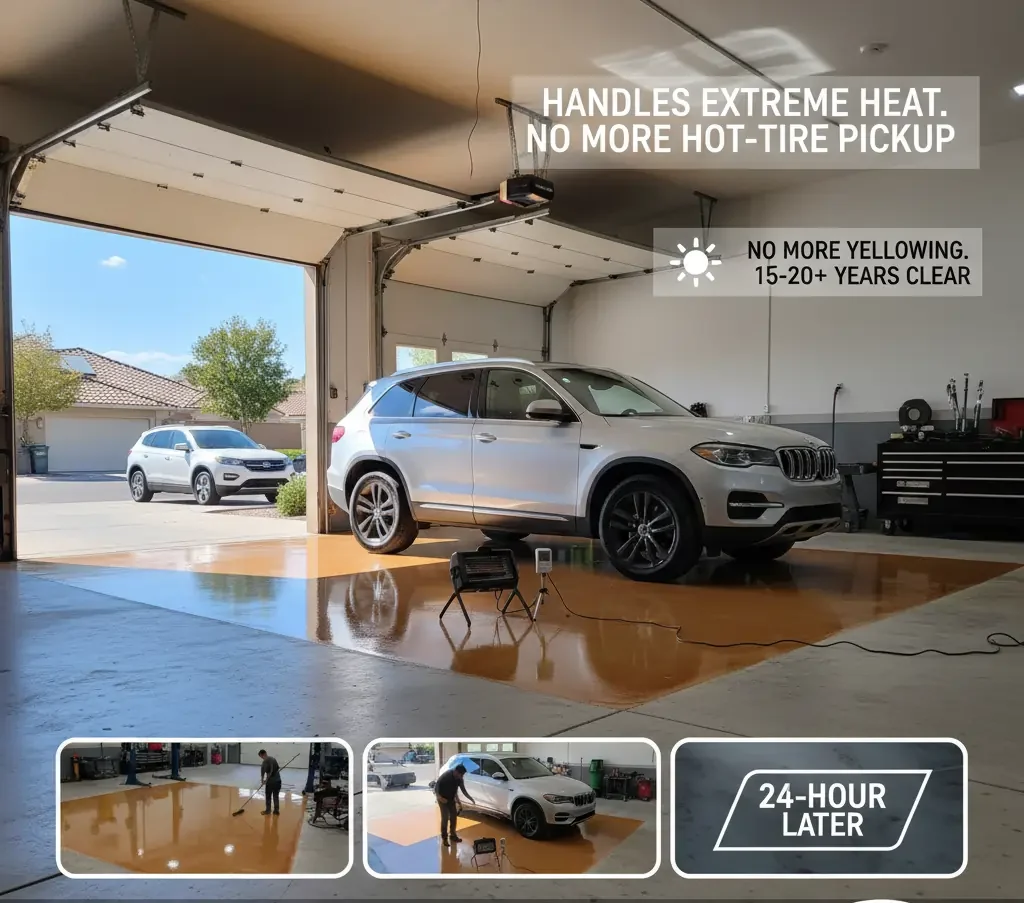
It Handles Our Extreme Heat Phoenix garages can hit 140-150°F in summer. Regular epoxy gets soft at these temperatures, causing hot tires to stick and pull up chunks. Polyaspartic stays stable even when your concrete is really hot.
No More Yellowing We get 300+ sunny days a year, and all that UV is tough on coatings. Regular epoxy turns yellow within 5-7 years. Polyaspartic has built-in UV protection and stays clear for 15-20+ years.
Quick Installation Most garage jobs are done in one day, and you’re back to using your space in 24 hours. No week-long projects during summer when you really need your garage.
Handles Temperature Swings Phoenix concrete expands and contracts daily – 30°F winter nights to 80°F afternoons. That movement cracks rigid coatings. Polyaspartic flexes with your concrete.
Polyaspartic Flooring Applications
Polyaspartic flooring is versatile and works well across multiple environments:
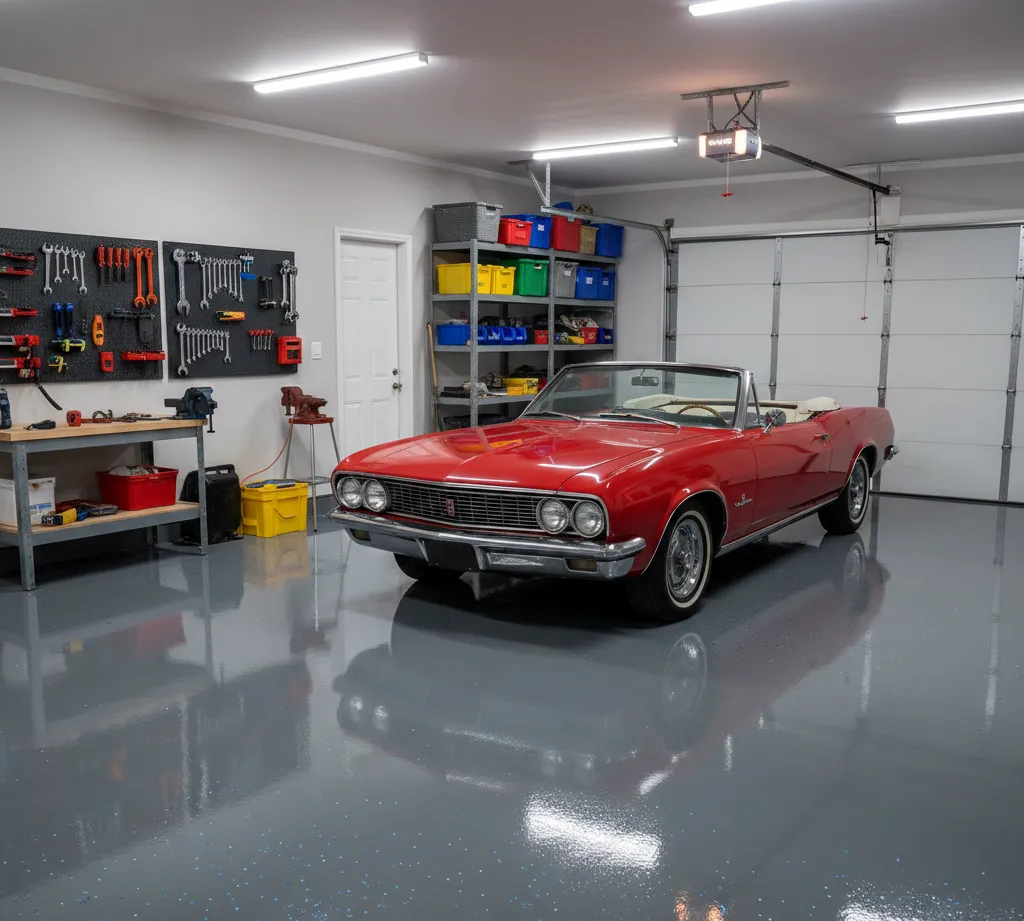
Garage Floor Polyaspartic Coatings
This is our most popular service. Phoenix garages deal with hot tires from cars that have been sitting in parking lots, oil drips, everyday spills, and concrete that’s constantly expanding and contracting. Polyaspartic handles it all without those annoying tire marks.
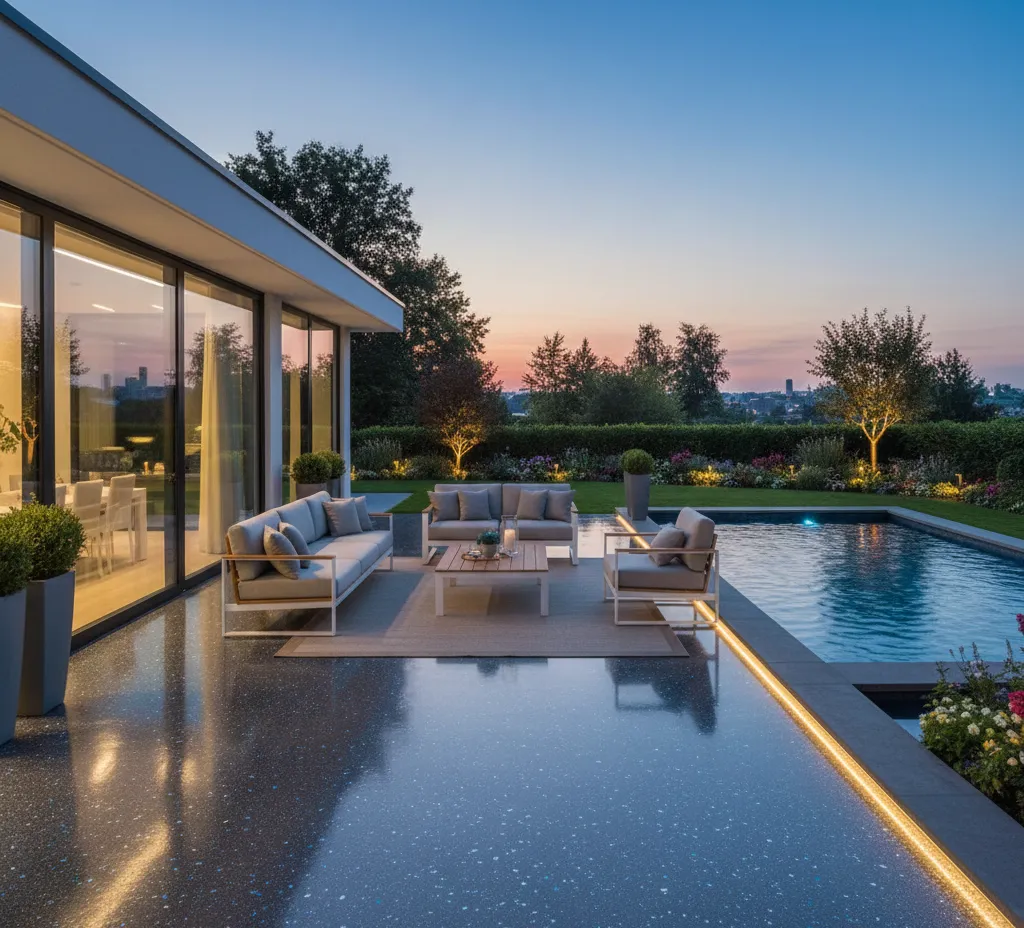
Outdoor & Patio Floors
Outside areas get the full Arizona sun treatment. Polyaspartic doesn’t yellow or fade like other coatings. We can add slip-resistant texture for pool safety, and it stays cooler underfoot than bare concrete
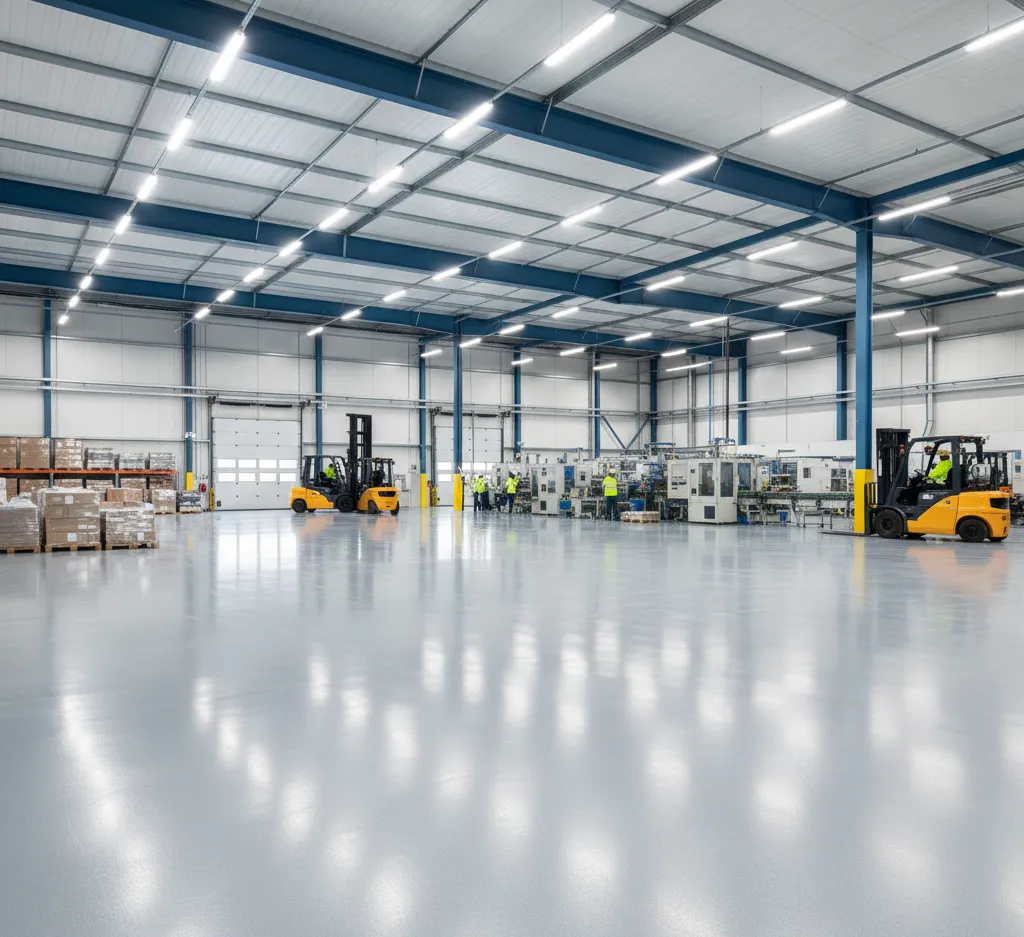
Commercial & Industrial Spaces
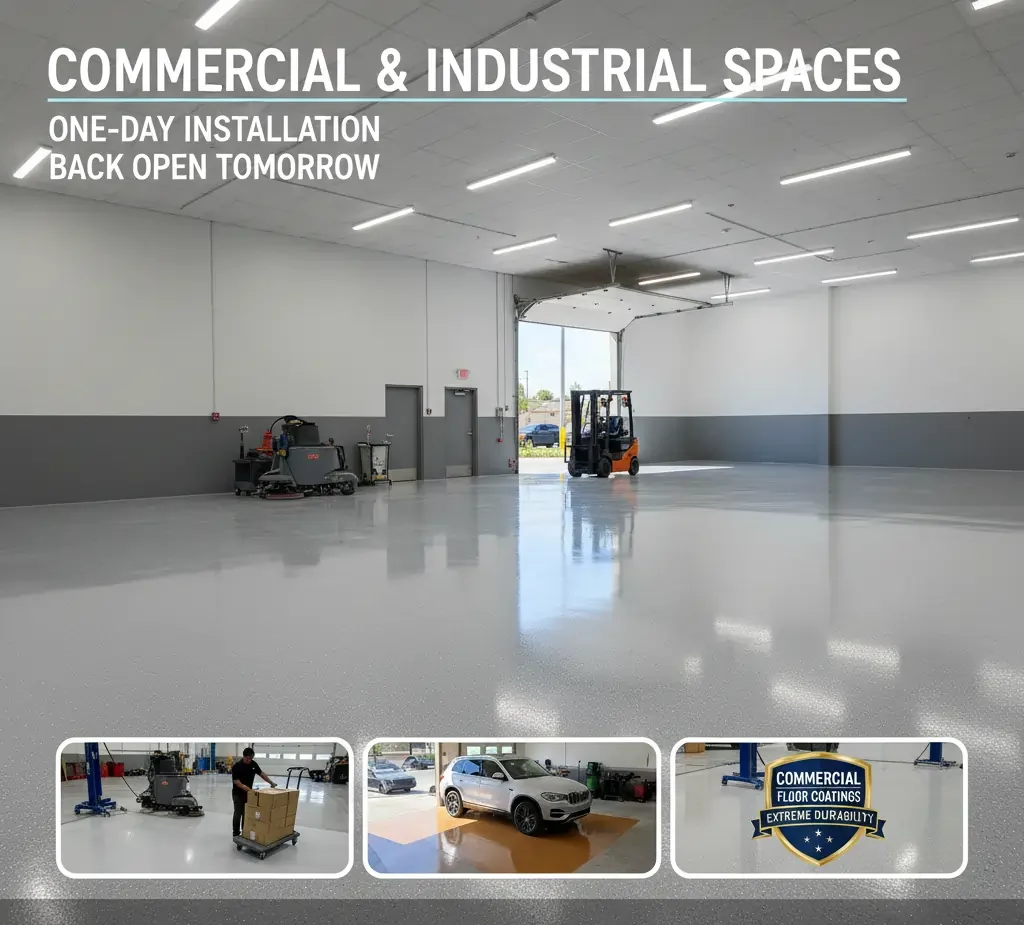
Businesses can’t shut down for a week. One-day installation means you’re back open the next day. Holds up to customer traffic and looks professional for years.
Workshops and Storage Areas
Shrugs off automotive fluid stains, handles dropped tools, and creates a bright workspace that’s easy to keep clean.
Polyaspartic vs Epoxy Flooring in Phoenix
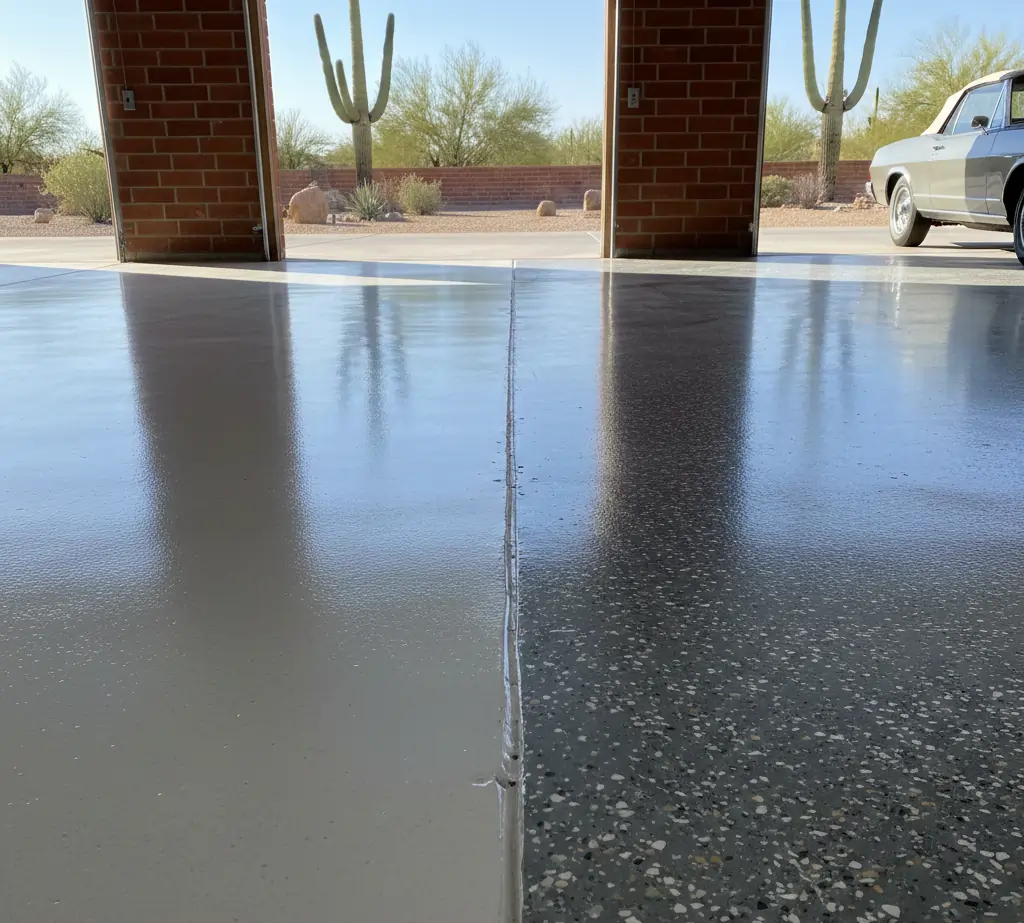
Epoxy works in mild climates, but Phoenix is different. Epoxy turns yellow in our sun – polyaspartic doesn’t. Epoxy takes 3-7 days to cure – polyaspartic is ready in 24 hours. Hot concrete makes epoxy soft and leaves tire marks – polyaspartic stays stable at 150°F.
Many installers use both: epoxy base for strength, polyaspartic top for UV protection and quick curing.
Our Polyaspartic Installation Process
We check your concrete for moisture, old coatings, and cracks.
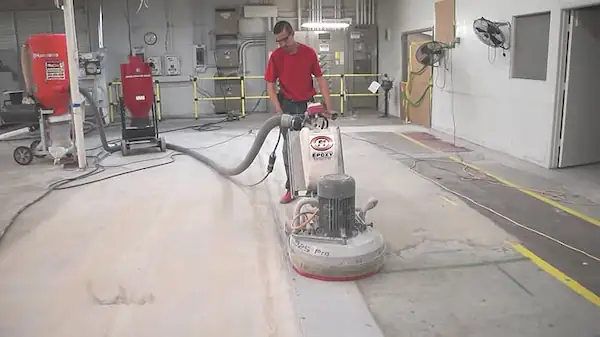
Diamond grinding removes oils and creates proper bonding.
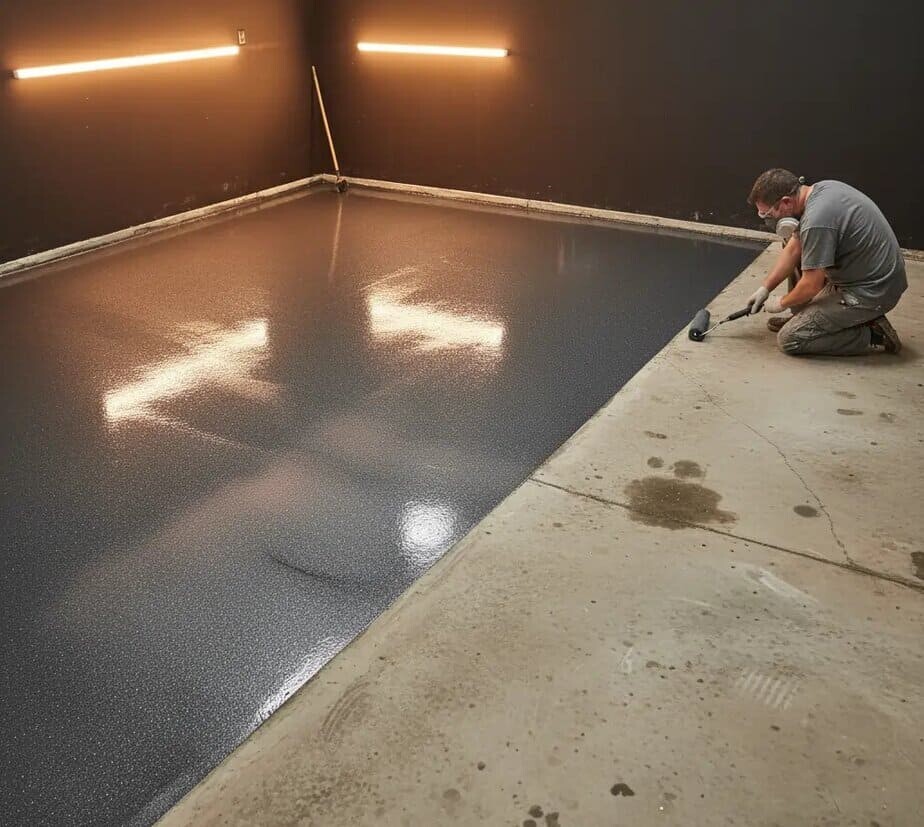
We fix cracks, apply epoxy base, add decorative flakes if you want them, and finish with polyaspartic top coat.
Why Choose First Class Coatings
34 Years in Arizona: Over 11,000 installations since 1990. We know Phoenix concrete inside and out.
Licensed (ROC 226766): Fully licensed, bonded, and insured.
Quality Materials: Commercial-grade polyaspartic, not DIY kits.
Reliable: We stick to our schedules and work around Phoenix weather.
What to Expect
Oil and brake fluid wipe off without staining. High-traffic areas keep their shine. Hot tires don’t leave marks – coating stays stable at 140°F. We have 15+ year old floors still looking great with daily Arizona sun.
Easy Maintenance
Polyaspartic floors are simple to care for:
Weekly: Sweep up dust (5 minutes).
Monthly: Mop with pH-neutral cleaner. Skip citrus or harsh chemicals.
Yearly: Quick check for any touch-ups needed.
Most folks spend under 10 minutes monthly.
What It Costs
In Phoenix, expect $7-12 per square foot for residential work. Price depends on your concrete’s condition, area size, and whether you want decorative flakes.
Yes, it costs more than basic epoxy upfront. But epoxy needs replacing every 5-10 years here. Polyaspartic lasts 15-20+ years, making it cheaper long-term.
First Class Coatings
Why Choose First Class Coatings in Phoenix?
- Local Phoenix expertise
- Trained, experienced installers
- Industrial-grade materials
- Transparent pricing
- Consistent, high-quality results
Frequently Asked Questions about Polyaspartic Coating
-
Is polyaspartic better than epoxy for Phoenix?
For most Phoenix applications, yes. It won't yellow in our sun, cures in 24 hours (vs a week), and handles hot tires better. We often use epoxy as the base with polyaspartic on top.
-
How long does it last?
15-20+ years with proper installation. The UV protection helps it outlast epoxy, which usually fails around 5-10 years under Arizona sun
-
Can you install during summer?
Absolutely! We schedule early morning installations during peak summer, but the heat doesn't stop us like it does with other coatings.
-
What's the difference between polyaspartic and polyurea?
Polyaspartic is polyurea that's been modified to cure slower. Regular polyurea sets in seconds - too fast. Polyaspartic gives us 15-30 minutes to apply it properly.
-
Will it be slippery when wet?
Not if done right. We add non-slip additives or decorative flakes for grip, customized to where you're using it.
-
Can you coat over old epoxy?
Sometimes, but usually not recommended. If the old epoxy is peeling, the new coating will fail too. Better to start fresh.
Book An Appointment
CALL US NOW
First Class Coatings Inc.
Please contact us for further questions on how you can benefit from our residential coating services.