Choosing a flooring option that can handle daily use, spills, heat, and heavy traffic is important for any home or workspace. That’s why many people consider epoxy-it’s strong, seamless, and visually clean. But beyond the look and feel, there’s always one practical question that comes up: how long will an epoxy floor actually last?
The lifespan can vary quite a bit depending on how it’s installed, how it’s used, and the conditions it’s exposed to over time. Some floors hold up for decades with minimal care, while others may show wear sooner if they’re exposed to heavy loads or harsh environments.
Here’s a closer look at what influences longevity and what you can do to keep an epoxy floor performing at its best.
Table of Contents
How Long Does an Epoxy Floor Last?
In most homes, a professionally installed epoxy floor lasts anywhere from 10 to 20 years. In commercial settings with heavier traffic, it typically lasts 5 to 10 years, while industrial systems can stretch beyond 20+ years with the right maintenance routine.
The lifespan depends heavily on how the concrete was prepared, what type of epoxy system was used, and how much wear the floor experiences every day.
What Impacts the Lifespan of an Epoxy Floor?
1. Surface Preparation
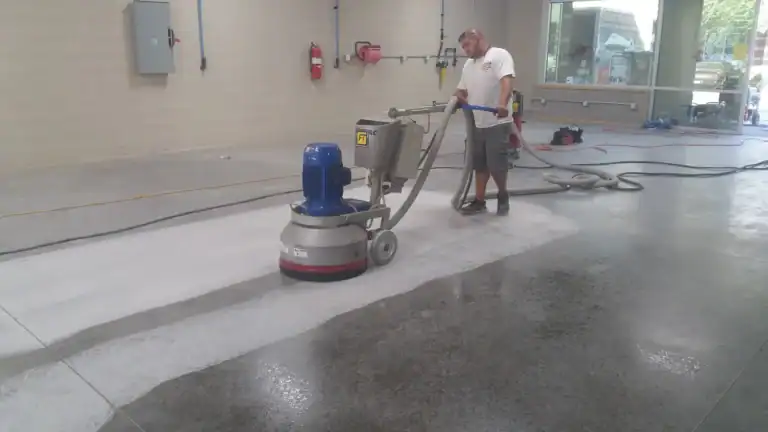
The foundation of any long-lasting epoxy floor is proper prep. Grinding or shot-blasting creates a clean, porous surface that the coating can bond to. When installers skip or rush this step, the flooring may peel or chip long before it should.
2. Type of Epoxy System
Not all coatings are created equal:
- 100% solids epoxy delivers the longest life.
- Polyaspartic coatings cure fast and resist UV damage.
- Water-based epoxy is budget-friendly but tends to have a shorter lifespan.
The more durable the system, the longer the floor will last.
3. Everyday Usage
A garage that sees only family vehicles experiences far less wear than a commercial warehouse, auto shop, or retail space. Heavy rolling loads, hot tires, and spilled chemicals all play a role in how long the coating holds up.
4. Environmental Factors
Heat, moisture, chemical exposure, and UV light can shorten a coating’s life if the system isn’t designed to handle them.
Are Epoxy Floors High Maintenance?
This is one of the most common questions homeowners ask. The short answer is no-epoxy floors are not high maintenance at all.
In fact, they’re much easier to care for than tile, wood, or bare concrete. A simple cleaning routine-sweeping, occasional mopping, and wiping up spills-is usually all you need. Because epoxy creates a seamless, non-porous surface, dirt and liquids don’t soak in, making it incredibly low-effort to keep clean.
So yes, epoxy floors are low maintenance, not high maintenance.
What Ruins an Epoxy Floor?
Even though epoxy is tough, certain conditions can damage it over time. The most common culprits include:
- Hot tire pickup from summer heat
- Heavy impacts from dropped tools or equipment
- Harsh chemicals like paint thinner or battery acid
- Moisture vapor issues from underneath the slab
- UV exposure near garage doors or windows
- Poor installation practices, especially DIY kits
Avoiding these issues-and choosing the right coating for your environment-goes a long way in extending the floor’s lifespan.
How to Make Your Epoxy Floor Last Longer
A few simple habits can keep your epoxy floor looking great for years:
- Clean regularly to remove debris
- Place mats under vehicles or equipment
- Mop up spills quickly
- Use gentle cleaning products
- Reseal or topcoat the floor every few years if needed
Even minor care can dramatically extend the floor’s lifespan.
Is It Cheaper to Tile or Epoxy a Floor?
When comparing cost, epoxy flooring is usually cheaper than tile-both upfront and long-term.
Upfront cost comparison:
- Epoxy flooring: Typically lower cost per square foot
- Tile flooring: Higher cost due to materials and labor
- Long-term maintenance: Epoxy requires very little upkeep, while tile can crack, stain, or require grout repairs
You get more durability for a lower total investment with epoxy, especially in garages, basements, and commercial spaces.
Signs Your Epoxy Floor Might Need Repair or Replacement
Even the best floors eventually show wear. Watch for:
- Peeling or bubbling
- Large cracks
- Dull or uneven finish
- Slippery spots
- Color fading near sun-exposed areas
Sometimes a quick topcoat is enough, but heavily worn floors may require full resurfacing.
In Summary
A well-installed epoxy floor is one of the most durable and low-maintenance flooring solutions available. With proper care, it can last for decades-far longer than tile, paint, or bare concrete.
If you’re choosing flooring for your garage, workshop, or commercial setting, epoxy offers a reliable mix of strength, value, and aesthetics. And when you understand what affects its lifespan, you can make sure your floor stays looking great for years to come.