What Is Epoxy Flooring?
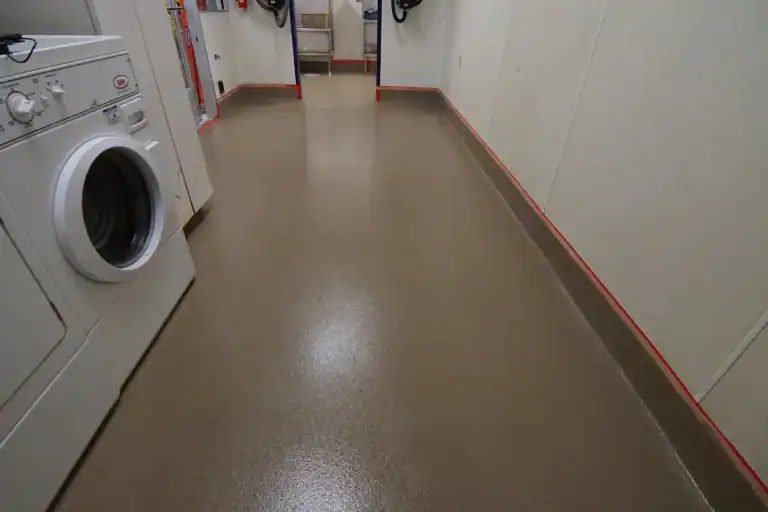
Epoxy flooring is a durable floor coating created by combining epoxy resin and hardener to form a strong, chemical‑resistant surface. Once applied to concrete floors, epoxy forms a rigid plastic-like layer that bonds tightly with the substrate.
This seamless coating is widely used in commercial and industrial environments because it offers high durability, easy maintenance, and resistance to chemicals, stains, and heavy traffic.
Epoxy flooring systems are typically installed in multiple layers, including a primer, base coat, optional broadcast layer for slip resistance or decoration, and a protective topcoat.
Because of its performance characteristics, epoxy flooring is commonly installed in facilities that require long‑lasting, hygienic, and low‑maintenance floors.
Common places where epoxy flooring is used include:
- Warehouses
- Manufacturing plants
- Commercial kitchens
- Retail stores
- Hospitals
- Automotive garages
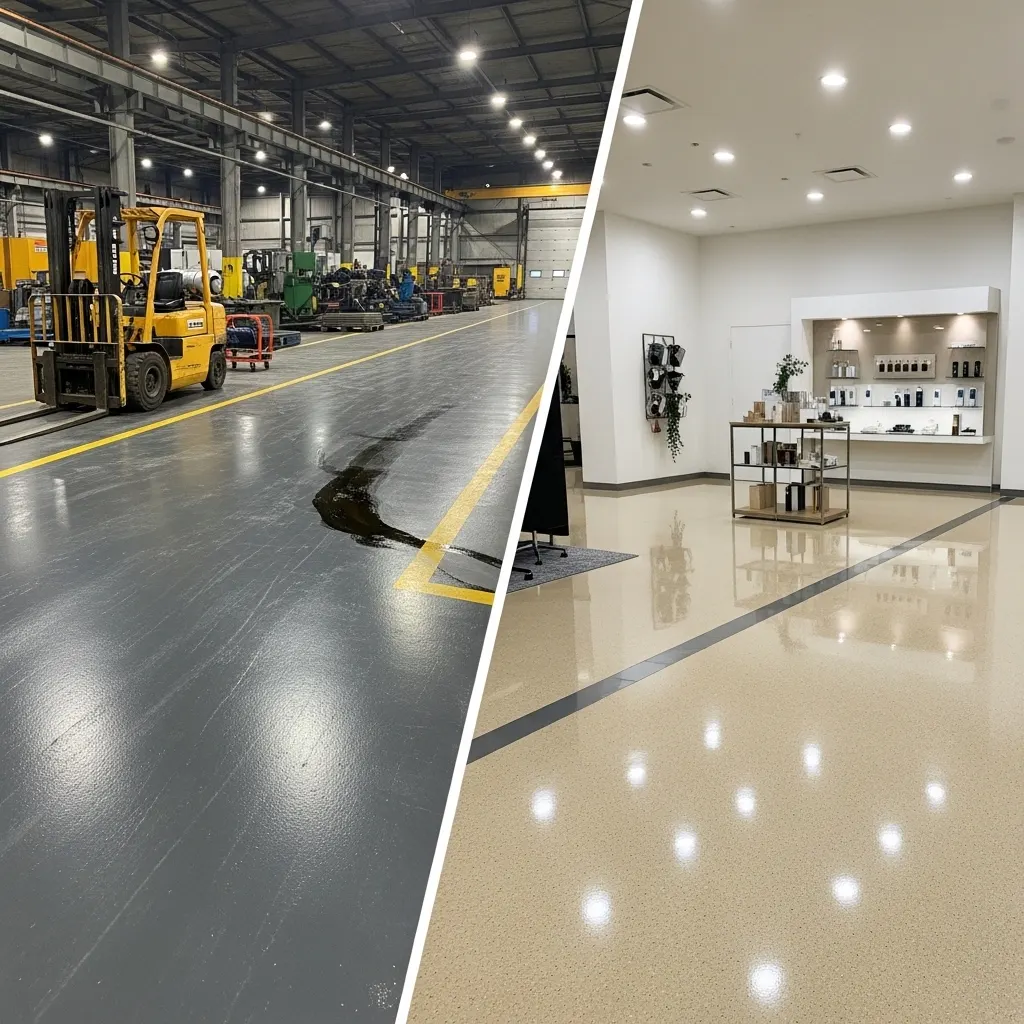
However, epoxy flooring systems are not all the same. Two of the most common types used in professional environments are industrial epoxy flooring and commercial epoxy flooring.
Understanding the difference between these systems helps businesses choose the right flooring solution for their facility, budget, and operational needs.
What Is Industrial Epoxy Flooring?
Industrial epoxy flooring is a heavy‑duty flooring system designed to withstand extreme operating conditions such as heavy machinery, constant forklift traffic, chemical exposure, and high impact loads. These coatings are typically thicker and more durable than standard epoxy systems used in lighter commercial environments.
Industrial epoxy floors are engineered to protect concrete substrates in demanding facilities where floor failure could disrupt operations or create safety risks. The system usually includes multiple layers of high‑build epoxy, sometimes combined with quartz or aggregate broadcasts to increase strength and slip resistance.
Compared to other epoxy systems, industrial coatings are formulated to provide superior resistance to:
- Abrasion from heavy equipment
- Chemical spills and industrial solvents
- Constant vehicle and forklift traffic
- Impact from dropped tools or machinery
- Thermal shock in certain environments
Because of these performance characteristics, industrial epoxy flooring is commonly installed in facilities where durability and safety are the top priorities.
Key Features of Industrial Epoxy Floors
Industrial epoxy flooring systems are specifically designed to handle harsh operating environments. Some of the defining features include:
- High thickness: Typically 20–40 mils or more depending on the system
- Extreme durability: Built to withstand heavy machinery and continuous traffic
- Chemical resistance: Protects concrete from oils, acids, and industrial chemicals
- Slip‑resistant surfaces: Often installed with quartz or aggregate broadcast systems
- Long lifespan: Can last 10–20 years with proper installation and maintenance
Where Industrial Epoxy Flooring Is Used
Industrial epoxy floors are commonly installed in facilities that require maximum durability and performance, including:
- Warehouses and distribution centers
- Manufacturing plants
- Pharmaceutical facilities
- Chemical processing plants
- Food processing plants
- Aircraft hangars
- Automotive manufacturing facilities
These environments demand flooring systems that can withstand constant operational stress while maintaining safety and structural integrity.
What Is Commercial Epoxy Flooring?
Commercial epoxy flooring is a durable floor coating system designed for businesses that require attractive, easy-to-maintain, and moderately heavy-duty flooring. While it is still highly durable, commercial epoxy systems are typically thinner and more focused on aesthetics and cleanliness compared to industrial-grade coatings.
These flooring systems are commonly used in facilities where customer appearance, hygiene, and daily foot traffic are the main concerns rather than heavy machinery or extreme industrial conditions.
Commercial epoxy coatings create a seamless, non-porous surface that resists stains, moisture, and bacteria, making them ideal for environments that require clean and sanitary floors.
Compared to industrial epoxy systems, commercial coatings usually use fewer layers and a thinner build, which helps reduce installation time and cost while still providing excellent durability.
Key Features of Commercial Epoxy Floors
Commercial epoxy flooring offers several advantages for businesses that need durable and attractive flooring solutions.
- Moderate thickness: Typically 10–20 mils depending on the system
- Decorative finishes: Available in a wide range of colors, flakes, and gloss finishes
- Easy maintenance: Seamless surface makes cleaning simple
- Stain resistance: Protects against spills, grease, and cleaning chemicals
- Improved safety: Can include slip-resistant additives
Common Commercial Applications
Commercial epoxy flooring is widely used in facilities that experience regular foot traffic and require visually appealing, hygienic floors.
Typical commercial environments include:
- Retail stores and showrooms
- Restaurants and commercial kitchens
- Hospitals and healthcare facilities
- Schools and educational buildings
- Shopping centers
- Office buildings
- Automotive service areas
In these environments, epoxy flooring provides a balance of durability, appearance, and ease of maintenance, making it a popular flooring choice for commercial properties.
Industrial vs Commercial Epoxy Flooring: Key Differences
While both industrial and commercial epoxy flooring systems provide durable and protective coatings for concrete floors, they are designed for very different environments. The main differences come down to thickness, strength, resistance levels, and intended use.
Below are the most important factors that separate industrial epoxy flooring from commercial epoxy systems.
Thickness
One of the biggest differences between industrial and commercial epoxy flooring is the thickness of the coating system.
Industrial epoxy floors are typically installed with a much thicker build to handle extreme wear and heavy equipment. These systems often range from 20–40 mils or more, depending on the facility requirements.
Commercial epoxy flooring systems are generally thinner, usually around 10–20 mils, because they are designed primarily for foot traffic and light vehicle use rather than heavy machinery.
Durability
Industrial epoxy flooring is engineered to withstand the harshest operating environments. It is designed to handle heavy machinery, pallet jacks, forklifts, and continuous operational stress.
Commercial epoxy flooring is still highly durable but is intended for environments where the load demands are lower, such as retail stores, restaurants, or office buildings.
Chemical Resistance
Industrial facilities often deal with oils, solvents, acids, and other aggressive chemicals. Industrial epoxy coatings are formulated to resist these substances and prevent damage to the concrete underneath.
Commercial epoxy flooring offers good stain and spill resistance but typically does not require the same level of chemical protection as industrial environments.
Aesthetics
Appearance plays a larger role in commercial environments. Commercial epoxy flooring is commonly installed with decorative finishes such as colored flakes, metallic effects, or high-gloss coatings.
Industrial epoxy flooring focuses more on performance than appearance. While it can still be visually appealing, the primary goal is durability, safety, and functionality.
Traffic Load
Industrial floors are built to support extremely heavy traffic from forklifts, industrial vehicles, and large equipment.
Commercial epoxy floors are designed for foot traffic, shopping carts, and light vehicle use, making them ideal for customer-facing environments.
Maintenance
Both industrial and commercial epoxy floors are relatively easy to maintain due to their seamless and non‑porous surface.
However, industrial floors may require periodic inspections or recoating in high‑wear zones due to constant equipment movement. Commercial floors typically require only routine cleaning such as sweeping and mopping to maintain their appearance.
| Feature | Industrial Epoxy Flooring | Commercial Epoxy Flooring |
|---|---|---|
|
Typical Thickness |
40–120+ mils |
10–30 mils |
|
Traffic Type
|
Heavy machinery, forklifts, pallet jacks
|
Foot traffic and light carts
|
|
Durability |
Extremely high impact and abrasion resistance
|
Moderate durability |
|
Chemical Resistance
|
Designed for oils, solvents, acids, and industrial chemicals |
Resistant to common spills and cleaning products
|
|
Installation System
|
Multi‑layer system with broadcast aggregates
|
Usually fewer coating layers
|
|
Lifespan |
10–20+ years with proper maintenance
|
5–10 years on average |
|
Cost Range
|
Higher due to thicker systems and prep work |
Lower installation cost
|
Industrial vs Commercial Epoxy Flooring Cost
The cost of epoxy flooring depends on several factors including surface preparation, coating thickness, materials used, and the overall size of the project. Because industrial epoxy systems are thicker and designed for harsher environments, they typically cost more than commercial epoxy flooring.
Commercial epoxy flooring is generally more affordable because it uses thinner coating systems and is installed in environments that require less intensive surface preparation.
Industrial epoxy floors, on the other hand, often require heavy-duty preparation methods such as grinding or shot blasting, along with multiple high-build epoxy layers to ensure long-term durability.
Below is a general comparison of typical installation costs.
| Flooring Type | Typical Cost per Square Foot |
|---|---|
|
Commercial Epoxy Flooring
|
$3 – $7 per sq ft
|
|
Industrial Epoxy Flooring
|
$6 – $15 per sq ft
|
|
Epoxy Mortar Systems
|
$10 – $20+ per sq ft
|
Factors That Affect Epoxy Flooring Cost
Several factors influence the final price of an epoxy flooring installation.
- Surface Preparation
Concrete preparation is often the most important step in the installation process. Grinding, shot blasting, crack repairs, and moisture mitigation may be required before applying epoxy coatings. - Coating Thickness
Thicker industrial epoxy systems require more materials and additional installation steps, which increases the overall cost. - Aggregate Broadcast Layers
Industrial systems often include sand or quartz broadcast layers that strengthen the coating and improve durability. These layers add material and labor costs but significantly increase the lifespan of the floor. - Chemical Resistance Requirements
Facilities that require chemical-resistant coatings such as novolac epoxy may have higher installation costs due to specialized materials. - Floor Size and Layout
Large open areas can reduce installation costs per square foot, while complex layouts, equipment obstacles, or tight spaces may increase labor time.
Although industrial epoxy flooring typically costs more upfront, it often provides better long-term value. The increased durability, longer lifespan, and reduced maintenance requirements can help facilities avoid costly repairs and downtime over time.
Several factors can influence the final price of an epoxy flooring system, including:
- Condition of the existing concrete
- Required surface preparation
- Thickness of the epoxy system
- Slip-resistant additives or decorative finishes
- Size of the installation area
Larger projects such as warehouses or manufacturing facilities may benefit from lower per-square-foot costs due to scale, while smaller commercial spaces may have slightly higher installation costs.
Although industrial epoxy flooring requires a higher upfront investment, it often delivers better long-term value because of its durability and longer lifespan in high-traffic environments.
Installation Differences
Although both industrial and commercial epoxy flooring systems follow similar installation principles, the complexity and materials used can differ significantly. Industrial installations typically involve more intensive preparation and thicker coating systems to ensure maximum durability.
Understanding the installation differences helps explain why industrial epoxy flooring usually costs more and takes longer to install than commercial systems.
Industrial Epoxy Installation Process
Industrial epoxy flooring installations are designed to create extremely durable surfaces capable of handling heavy equipment, chemicals, and constant traffic. Because of this, the preparation and application process is often more extensive.
Typical industrial epoxy installation steps include:
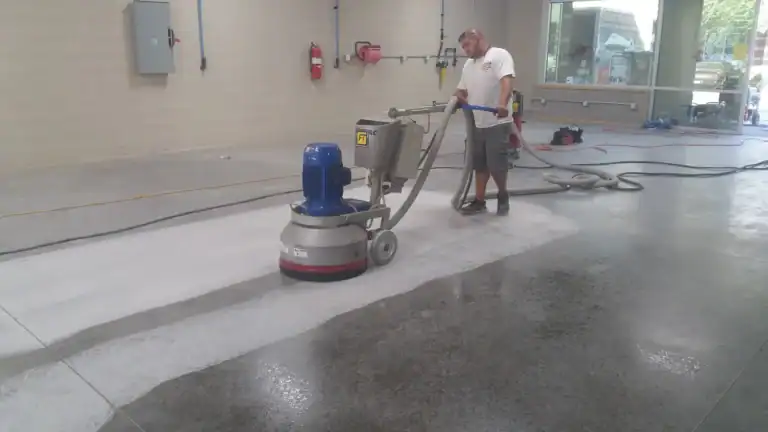
- Concrete surface preparation using grinding or shot blasting
- Moisture testing and crack repair to prevent coating failure
- Industrial-grade epoxy primer application
- High-build epoxy base coat installation
- Quartz or aggregate broadcast for added strength and slip resistance
- Protective topcoat application for chemical and abrasion resistance
This multi-layer system creates a thicker, more resilient floor capable of lasting for many years in demanding environments.
Commercial Epoxy Installation Process
Commercial epoxy flooring installations follow similar steps but usually require fewer layers and thinner coatings. The focus is often on achieving a clean, attractive finish while still providing durability for everyday business operations.
Typical commercial epoxy installation includes:
- Concrete cleaning and light surface grinding
- Crack repair and minor surface preparation
- Epoxy primer application
- Base coat installation
- Optional decorative flakes or color systems
- Protective clear topcoat
Because commercial systems are thinner and less complex, they generally require less installation time than industrial flooring systems.
However, proper surface preparation remains critical for both systems. Skipping steps such as grinding or moisture testing is one of the most common causes of epoxy flooring failure.
How Long Do Industrial and Commercial Epoxy Floors Last?
The lifespan of an epoxy flooring system depends on factors such as traffic levels, maintenance practices, installation quality, and the thickness of the coating. Because industrial epoxy systems are thicker and built for extreme conditions, they generally last longer than commercial epoxy flooring.
Industrial epoxy floors are designed to withstand constant forklift traffic, heavy machinery, and chemical exposure. When properly installed and maintained, these floors can last 10 to 20 years before requiring major resurfacing or replacement.
Commercial epoxy flooring systems typically last 5 to 10 years, depending on the level of foot traffic and the type of business environment. Retail stores, restaurants, and office buildings often experience moderate wear compared to industrial facilities, which helps extend the life of the coating.
Below is a general comparison of epoxy floor lifespan.
| Flooring Type | Typical Lifespan | Traffic Level |
|---|---|---|
|
Commercial Epoxy Flooring
|
5 – 10 years
|
Foot traffic and light vehicles
|
|
Industrial Epoxy Flooring
|
10 – 20 years
|
Heavy machinery and forklift traffic
|
Several factors can influence how long epoxy flooring lasts, including:
- Quality of surface preparation before installation
- Thickness of the epoxy coating system
- Frequency of cleaning and maintenance
- Exposure to chemicals or heavy equipment
- Environmental conditions such as moisture or temperature changes
Regular maintenance, including routine cleaning and occasional recoating in high-wear areas, can significantly extend the lifespan of both commercial and industrial epoxy flooring systems.
Industrial vs Commercial Epoxy Flooring: Which One Should You Choose?
Choosing between industrial and commercial epoxy flooring depends largely on the specific needs of your facility. Factors such as traffic levels, equipment loads, chemical exposure, and aesthetic requirements all play an important role in determining which system is the best fit.
Industrial epoxy flooring is typically the better choice for facilities that operate heavy machinery, handle chemicals, or experience constant vehicle traffic. These environments require thicker coatings and stronger protective layers to prevent premature wear or concrete damage.
Commercial epoxy flooring is ideal for businesses that prioritize appearance, cleanliness, and easy maintenance while still needing a durable surface. Retail spaces, restaurants, healthcare facilities, and office buildings often benefit from decorative epoxy systems that provide both performance and visual appeal.
When deciding between the two, consider the following factors:
- Traffic load: Heavy forklifts and equipment require industrial-grade systems.
- Chemical exposure: Industrial environments need higher chemical resistance.
- Aesthetic requirements: Commercial spaces often require decorative finishes.
- Budget considerations: Commercial epoxy systems are typically more affordable.
- Maintenance needs: Both systems are easy to maintain but industrial floors may require periodic inspections in high-wear areas.
In many cases, consulting with an experienced epoxy flooring contractor can help determine the appropriate system based on the operational demands of the facility. Selecting the correct epoxy flooring type ensures better performance, longer lifespan, and lower long-term maintenance costs.
Conclusion
Both industrial and commercial epoxy flooring systems provide durable, long-lasting protection for concrete floors, but they are designed for different environments and operational demands. Industrial epoxy flooring is built for heavy-duty conditions such as warehouses, manufacturing plants, and facilities with heavy machinery or chemical exposure. Its thicker coating system and enhanced durability allow it to withstand extreme traffic and harsh working conditions.
Commercial epoxy flooring, on the other hand, is designed for businesses that need a balance of durability, cleanliness, and visual appeal. Retail stores, restaurants, hospitals, and office buildings often choose commercial epoxy floors because they provide an attractive, seamless surface that is easy to maintain.
Understanding the differences between these two systems helps facility managers and business owners choose the right flooring solution for their needs. Factors such as traffic load, environmental conditions, aesthetic goals, and budget should all be considered when selecting an epoxy flooring system.
When properly installed and maintained, both industrial and commercial epoxy flooring can provide years of reliable performance while protecting the underlying concrete and improving the safety and functionality of the space.
Frequently Asked Questions (FAQs)
-
What is the difference between industrial epoxy and regular epoxy?
Industrial epoxy flooring is formulated for heavy-duty environments such as warehouses, factories, and manufacturing facilities. It is thicker, stronger, and more resistant to chemicals, impacts, and heavy equipment like forklifts. Regular epoxy (often used in homes or light commercial spaces) is typically thinner and designed mainly for aesthetics and light foot traffic rather than heavy industrial use.
-
How long does commercial epoxy flooring last?
Commercial epoxy flooring typically lasts between 7 and 15 years, depending on the level of traffic, maintenance practices, and installation quality. In moderate-traffic environments such as retail stores, showrooms, or offices, epoxy floors can last well over a decade with proper care.
-
What is industrial epoxy used for?
Industrial epoxy flooring is used in facilities that require high durability, chemical resistance, and heavy-load performance. Common applications include warehouses, manufacturing plants, logistics centers, automotive facilities, and food processing plants where floors must withstand machinery, forklifts, and constant movement.
-
How much does epoxy flooring cost for a warehouse?
Warehouse epoxy flooring typically costs $3 to $12 per square foot depending on the condition of the concrete, coating thickness, surface preparation, and additional features like anti-slip textures or chemical-resistant coatings. Large warehouses may see lower per-square-foot costs due to scale.