How to Clean Epoxy Floor Coating (Garage & Commercial Floors)
Epoxy floor coatings are known for their durability, glossy finish, and resistance to stains-but that doesn’t mean they’re maintenance‑free. Dirt, dust, oil, and chemical residue can slowly dull the surface if the floor isn’t cleaned the right way. The good news? Cleaning an epoxy floor coating is simple when you follow the correct process and use epoxy‑safe tools and cleaners.
Whether you have an epoxy‑coated garage floor, warehouse flooring, or a commercial showroom surface, proper cleaning helps preserve the shine, prevent surface damage, and extend the life of your coating.
Why Cleaning Epoxy Floors Properly Matters
Epoxy floors are designed to withstand heavy traffic, moisture, and spills – but improper cleaning can still cause premature wear. Using harsh chemicals, abrasive brushes, or neglecting routine maintenance may lead to dullness, micro-scratches, and reduced slip resistance over time.
Regular and correct cleaning of epoxy floor coatings offers several key benefits:
- Preserves the glossy finish by preventing dirt buildup and surface abrasion
- Extends the lifespan of the epoxy coating and topcoat
- Improves safety by reducing slip hazards from oil, grease, and dust
- Maintains a professional appearance for garages, showrooms, and commercial spaces
Epoxy Floor Cleaning Frequency: Daily, Weekly & Monthly
One of the most common questions homeowners and facility managers ask is how often epoxy floor coatings should be cleaned. The answer depends on traffic levels, usage, and the type of space-but following a consistent cleaning schedule is the key to long-term performance.
Below is a simple, proven cleaning frequency guide for epoxy-coated garage floors and commercial epoxy flooring.
Recommended Epoxy Floor Cleaning Schedule
| Cleaning Frequency | Task | Tools & Products Needed |
|---|---|---|
|
Daily (High-Traffic Areas) |
Dry dust removal |
Soft broom or dust mop |
|
Weekly |
Light cleaning |
Microfiber mop, warm water, pH-neutral cleaner |
|
Monthly |
Deep cleaning |
Mop or auto scrubber (soft pads), epoxy-safe cleaner |
|
As Needed |
Spill & stain removal |
Absorbent towels, soft brush, mild degreaser |
Daily Maintenance for Epoxy Floors
For garages, workshops, and commercial spaces with frequent foot or vehicle traffic, daily dust removal helps prevent fine debris from scratching the epoxy surface. A soft broom or microfiber dust mop is ideal – avoid stiff bristles that can cause surface abrasion.
Weekly Cleaning Routine
Weekly cleaning removes light grime, tire marks, and surface residue. Use a microfiber mop with warm water and a pH-neutral epoxy floor cleaner. This maintains the shine without weakening the coating or topcoat.
Monthly Deep Cleaning
Monthly deep cleaning is recommended for epoxy coated garage floors, warehouses, and showrooms. This process removes embedded dirt and stubborn residue that regular mopping can miss. For larger spaces, a floor scrubber with soft pads is safe when used correctly.
Cleaning After Spills or Stains
Oil, grease, chemicals, and automotive fluids should be cleaned immediately. Prompt cleanup prevents staining and reduces slip hazards, especially in garage and industrial environments.
| Product Type | Safe for Epoxy? | Best Use Case |
|---|---|---|
|
pH-neutral floor cleaner |
Yes |
Routine weekly & monthly cleaning |
|
Mild degreaser (epoxy-safe) |
Yes |
Oil & grease stain removal |
|
Warm water |
Yes |
Light cleaning and rinsing |
|
Dish soap (small amounts) |
Limited |
Occasional light cleaning only |
|
Vinegar or citrus cleaners |
No |
Can dull or etch epoxy finish |
|
Bleach or ammonia |
No |
May discolor and weaken coating |
DIY Epoxy Floor Cleaning Solution (Safe Mix)
For regular cleaning, you can create a simple DIY solution:
- Warm water
- Small amount of pH-neutral cleaner
Mix gently and avoid over-concentrating the solution. Too much cleaner can leave residue and reduce gloss.
Tools and Products to Avoid on Epoxy Floors
Certain products may clean aggressively but can cause long-term damage:
- Abrasive scrub pads or steel wool
- Acidic cleaners (vinegar, citrus-based products)
- Powdered cleaners
- Steam cleaners at high heat
- Tire shine or silicone-based residue products
Choosing epoxy-safe tools and cleaners ensures your epoxy coated garage floor stays glossy, slip-resistant, and protected for years.
Step-by-Step: How to Clean an Epoxy Coated Garage Floor
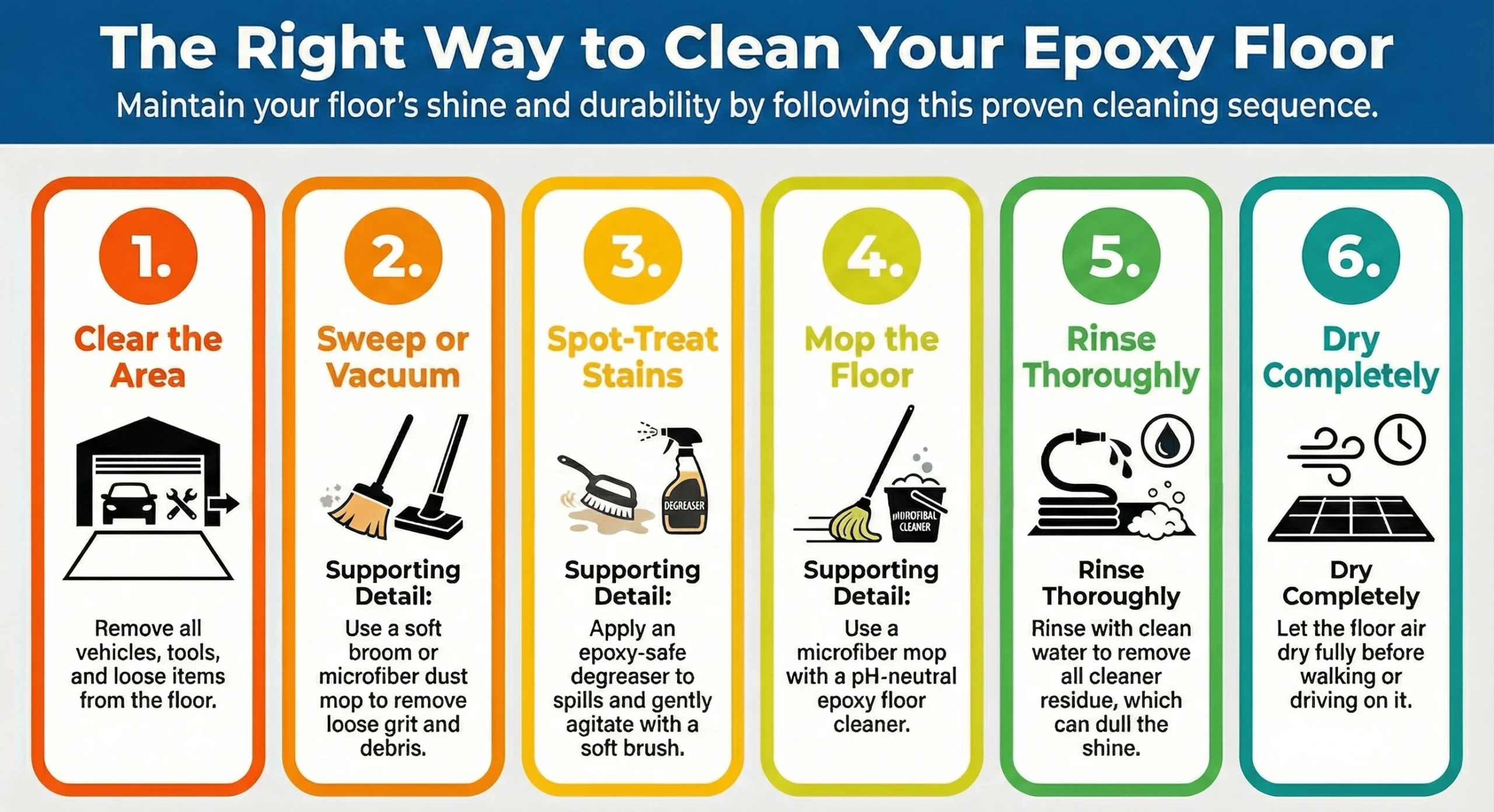
Cleaning an epoxy coated garage floor doesn’t require special equipment or harsh chemicals-but it does require the right sequence. Following these steps helps prevent streaking, surface scratches, and residue buildup while keeping the epoxy finish glossy and slip-resistant.
Step 1: Clear the Floor Area
Remove vehicles, tools, mats, and loose items from the garage floor. This allows you to clean the entire surface evenly and prevents dirt from being pushed into corners or edges.
Step 2: Dry Dust Removal (Sweep or Vacuum)
Use a microfiber dust mop, soft broom, or shop vacuum to remove loose dirt, sand, and debris. This step is critical-gritty particles left on the floor can act like sandpaper during mopping and cause micro-scratches in the epoxy coating.
Step 3: Spot Treat Oil, Grease, and Spills
For visible stains or spills:
- Blot fresh oil or chemical spills immediately with absorbent towels
- Apply an epoxy-safe degreaser to stubborn spots
- Gently agitate with a soft nylon brush
Avoid aggressive scrubbing, which can dull the surface over time.
Step 4: Mop the Floor With an Epoxy-Safe Cleaner
Mix warm water with a pH-neutral epoxy floor cleaner according to label instructions. Mop the floor using a microfiber mop, working in small sections to avoid streaking.
For larger garages or commercial spaces, an auto floor scrubber with soft pads only can be used at low pressure.
Step 5: Rinse Thoroughly
After mopping, rinse the floor with clean water to remove any remaining cleaner residue. Residue buildup is one of the most common reasons epoxy floors lose their shine.
A wet/dry vacuum can help speed up water removal, especially in garages without proper drainage.
Step 6: Allow the Floor to Dry Completely
Let the epoxy floor air dry or use fans to improve airflow. Avoid driving or walking on the floor until it is completely dry to prevent footprints, streaks, or trapped moisture.
Optional: Light Buffing for Extra Shine
Once dry, lightly buffing the floor with a clean microfiber pad can restore shine and enhance the appearance of epoxy coated garage floors.
How to Remove Tough Stains From Epoxy Floors
While epoxy floor coatings are stain-resistant, certain substances can leave marks if they’re not cleaned properly or quickly. The key is using the right method for each stain type without damaging the epoxy surface or dulling the finish.
Removing Oil & Grease Stains
Oil and grease are the most common garage floor stains.
Best method:
- Blot excess oil immediately with absorbent towels or paper towels
- Apply an epoxy-safe degreaser directly to the stain
- Let it sit for a few minutes (do not let it dry)
- Gently scrub with a soft nylon brush
- Rinse thoroughly with clean water
Avoid solvent-based cleaners, which may weaken the epoxy coating over time.
Removing Tire Marks & Rubber Scuffs
Hot tires can leave rubber marks on epoxy floors, especially in garages.
Best method:
- Use warm water mixed with a pH-neutral cleaner
- Lightly scrub the area with a microfiber mop or soft brush
- For stubborn marks, apply a mild degreaser and repeat
Regular cleaning helps prevent tire marks from becoming permanent.
Removing Rust Stains
Rust stains usually come from metal tools, shelving, or wet equipment left on the floor.
Best method:
- Use a mild, epoxy-safe rust remover
- Apply gently and scrub lightly with a soft brush
- Rinse immediately and dry the area
Avoid acidic rust removers unless specifically labeled safe for epoxy floors.
Removing Paint, Adhesive, or Chemical Residue
Paint drips or adhesive residue can bond to the epoxy surface if left unattended.
Best method:
- Scrape gently using a plastic scraper (never metal)
- Apply warm water and mild cleaner to soften residue
- For stubborn spots, use a small amount of epoxy-safe solvent and rinse thoroughly
Always spot-test in an inconspicuous area before using any solvent.
Removing Salt & Winter Residue
Road salt and de-icing chemicals can leave white residue and reduce traction.
Best method:
- Sweep or vacuum dry residue first
- Mop with warm water and a pH-neutral cleaner
- Rinse well to remove all salt traces
Prompt removal prevents surface dulling and slip hazards.
Proper stain removal not only keeps epoxy floors looking clean but also protects the coating from long-term damage.
What NOT to Use on Epoxy Floors (Common Cleaning Mistakes)
Epoxy floor coatings are tough, but they are not indestructible. Many issues like dullness, discoloration, and premature wear are caused not by traffic-but by improper cleaning methods. Avoiding the following mistakes will help protect your epoxy coated garage floor and maintain its appearance long-term.
Avoid Harsh or Acidic Cleaners
Cleaners that are acidic or overly alkaline can slowly break down the epoxy surface and topcoat.
Do not use:
- Vinegar or citrus-based cleaners
- Acidic rust removers not labeled epoxy-safe
- Concentrated bleach or ammonia solutions
These products may clean aggressively at first but often leave epoxy floors dull, chalky, or discolored over time.
Don’t Use Abrasive Tools or Scrub Pads
Abrasive tools scratch the epoxy surface, creating micro-grooves that trap dirt and reduce gloss.
Avoid using:
- Steel wool or wire brushes
- Abrasive scrub pads
- Stiff-bristle brushes
Always choose microfiber mops, soft nylon brushes, or soft scrubber pads designed for coated floors.
Avoid Steam Cleaners and High Heat
High heat can soften or weaken epoxy coatings, especially on older floors or thinner topcoats.
Steam cleaners and extremely hot water may cause:
- Loss of gloss
- Surface hazing
- Reduced coating adhesion
Stick to warm water and low-pressure cleaning methods instead.
Don’t Let Cleaners Dry on the Floor
Allowing cleaning solutions to dry on epoxy floors can leave residue and streaks.
Always:
- Mop in small sections
- Rinse thoroughly with clean water
- Remove excess moisture with a wet/dry vacuum if needed
Avoid Silicone-Based or Tire Shine Products
Silicone and tire shine products can leave slippery residues and reduce traction, creating a safety hazard-especially in garages and commercial environments.
Don’t Ignore Spills or Standing Water
While epoxy is moisture-resistant, prolonged exposure to standing water or chemicals can weaken seams and edges over time.
Prompt cleanup is one of the easiest ways to prevent staining and coating damage.
Advanced Cleaning Methods for Epoxy Floors (Used Safely)
For heavily used garages, warehouses, and commercial spaces, routine mopping may not be enough. Advanced cleaning methods can restore appearance and cleanliness-when used correctly. Improper use, however, can damage the epoxy coating. Follow these guidelines to clean deeper without compromising the floor.
Using an Auto Floor Scrubber on Epoxy Floors
Auto scrubbers are effective for large epoxy-coated areas when paired with the right settings.
Best practices:
- Use soft white or red pads only (never black or abrasive pads)
- Select low to moderate pressure
- Use a pH-neutral epoxy-safe cleaner
- Rinse thoroughly after scrubbing to prevent residue buildup
Auto scrubbers are ideal for showrooms, warehouses, and commercial garages with consistent traffic.
Pressure Washing Epoxy Floors (When Is It Safe?)
Pressure washing can be used on epoxy floors-but only with caution.
Safe pressure washing guidelines:
- Use low pressure and a wide fan tip
- Keep the nozzle moving; never concentrate pressure on one spot
- Avoid seams, edges, and expansion joints
- Do not use hot water or steam settings
Pressure washing is best for outdoor or well-drained epoxy surfaces and should be avoided on older or damaged coatings.
Deep Cleaning for Heavily Soiled Floors
For epoxy floors with heavy grease buildup or embedded dirt:
- Pre-soak the surface with warm water and epoxy-safe cleaner
- Allow the solution to dwell briefly (do not let it dry)
- Agitate gently with a soft brush or scrubber
- Rinse thoroughly and remove excess water
This method restores cleanliness without aggressive abrasion.
When to Call a Professional Epoxy Floor Cleaning Service
In some cases, professional cleaning is the safest option:
- Floors with severe staining or buildup
- Large commercial or industrial spaces
- Older epoxy coatings showing wear
- Floors requiring gloss restoration
Professionals use equipment and products specifically designed for epoxy floor coatings, reducing the risk of damage while improving results.
Advanced cleaning methods can be highly effective – but only when paired with epoxy-safe tools, cleaners, and proper technique.
Preventative Maintenance Tips to Keep Epoxy Floors Looking New
Preventative maintenance is the easiest and most cost-effective way to extend the life of epoxy floor coatings. Small habits and protective measures can significantly reduce wear, staining, and loss of gloss – especially in garages and high-traffic commercial spaces.
Use Mats and Floor Protection
Placing mats at entry points helps trap dirt, sand, and moisture before they reach the epoxy surface.
Recommended placements:
- Entry doors to garages or workshops
- Under vehicle parking areas
- Near workbenches or equipment zones
Use non-rubber-backed mats to avoid discoloration or residue transfer.
Install Protective Pads Under Heavy Equipment
Heavy equipment, shelving, or tool chests can scratch epoxy floors when moved or vibrate over time.
- Use felt or rubber protective pads under legs and wheels
- Avoid dragging equipment across the floor
- Lift heavy items when repositioning whenever possible
Clean Spills Immediately
While epoxy floors are moisture-resistant, chemicals and automotive fluids can stain or reduce traction if left too long.
Prompt cleanup:
- Prevents staining and residue buildup
- Reduces slip hazards
- Preserves the coating’s finish
Avoid Metal-to-Floor Contact
Metal objects such as jacks, stands, or tool legs can gouge or scratch epoxy surfaces.
Use rubber mats or protective boards when working with metal equipment directly on the floor.
Seasonal Maintenance Tips
Epoxy floors face different challenges throughout the year:
- Winter: Remove road salt and de-icing chemicals quickly to prevent residue and dulling
- Rainy seasons: Control moisture and mud with entry mats
- Summer: Clean tire marks more frequently due to heat-softened rubber
Maintain a Consistent Cleaning Schedule
Following a regular cleaning routine-daily dust removal, weekly mopping, and monthly deep cleaning-prevents buildup that can permanently affect the epoxy coating.
Preventative care not only keeps epoxy floors clean but also preserves safety, appearance, and long-term performance.
Final Thoughts: Keep Your Epoxy Floors Clean, Glossy, and Long-Lasting
Epoxy floors are durable, low-maintenance, and built to look great for years – but only when cleaned the right way. Using a pH-neutral cleaner, avoiding harsh chemicals like vinegar or bleach, and sticking to microfiber tools will protect the coating and preserve its shine. Regular light cleaning goes much further than aggressive scrubbing.
If your epoxy floor still looks dull, scratched, or worn despite proper cleaning, it may be time for professional maintenance or a fresh clear topcoat. Expert care can restore gloss, improve slip resistance, and extend the life of your floor.
Need help cleaning, repairing, or recoating an epoxy floor? Contact our epoxy flooring specialists to get expert advice or a professional solution tailored to your space.
Frequently Asked Questions About Cleaning Epoxy Floors
-
Can epoxy floors be mopped?
Yes. Epoxy floors are designed to be mopped. Use a microfiber mop with warm water and a pH‑neutral epoxy-safe cleaner. Avoid excess water and always rinse to prevent residue.
-
What is the best cleaner for epoxy floors?
The best cleaner is a pH‑neutral cleaner made for epoxy or resin floors. It cleans effectively without dulling the gloss or damaging the protective topcoat.
-
Can I use Dawn dish soap on an epoxy floor?
Occasionally, yes-but not regularly. A few drops of Dawn can remove light dirt, but frequent use leaves residue that reduces shine. For routine cleaning, use an epoxy-specific cleaner.
-
Can I use vinegar to clean epoxy floors?
No. Vinegar is acidic and can dull or damage epoxy coatings over time, even when diluted. It should not be used on epoxy floors.
-
What not to use to clean epoxy floors?
Do not use:
- Vinegar or acidic cleaners
- Bleach or ammonia
- Abrasive pads or steel wool
- Steam cleaners or very hot water
- Gritty or powdered cleaners
These products can scratch, discolor, or weaken the epoxy coating.
-
Can you use Swiffer wet pads on epoxy floors?
Yes, but only occasionally. Some Swiffer pads leave residue that dulls epoxy floors. A microfiber mop with an epoxy-safe cleaner is better for regular cleaning.
-
Why does my epoxy floor look dull after mopping?
Epoxy floors look dull due to cleaner residue, soap buildup, or harsh chemicals. Rinsing with clean water and switching to a pH-neutral cleaner usually restores shine.
-
What can I put on my epoxy floor to make it shine?
Proper cleaning and residue removal restore most shine. Light microfiber buffing helps. If dullness remains, a professional recoat or clear topcoat may be needed.
-
Is it safe to pressure wash epoxy floors?
Yes, with caution. Use low pressure, a wide fan tip, and cold water. Keep the nozzle moving and avoid seams, edges, and expansion joints.
-
How often should epoxy floors be cleaned?
- Dust mop: daily or as needed
- Wet mop: weekly with a pH-neutral cleaner
- Deep clean: monthly for garages or high-traffic areas
Clean spills immediately to prevent staining.