
Resin flooring is the umbrella term for any floor system made with a liquid-applied synthetic resin — epoxy, polyurethane, polyaspartic, and MMA all fall under it. Epoxy flooring is one specific type of resin flooring, built from epoxy resin and a hardener that cure into a hard, glossy, chemical-resistant surface. In plain terms: every epoxy floor is a resin floor, but not every resin floor is epoxy. If you’re weighing options for a garage, warehouse, or showroom — say, comparing epoxy flooring in Phoenix against other resin systems — the right pick comes down to your budget, cure-time needs, and how much abuse the floor has to take.
Homeowners and facility managers throw around “resin flooring” and “epoxy flooring” like they’re the same thing. They’re related, but they’re not identical, and knowing the difference can save you from picking the wrong system for your garage, warehouse, or restaurant kitchen. This guide breaks down both terms in plain English, compares them side by side, and helps you figure out which one actually fits your space.
What Is Resin Flooring?
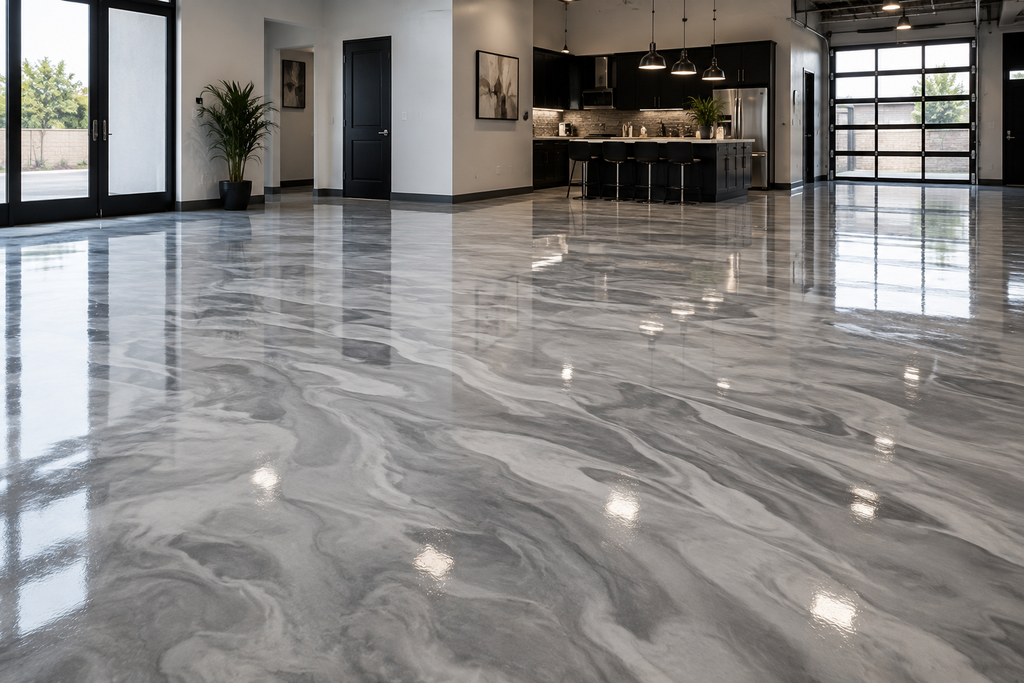
Resin flooring is a catch-all category. It covers any floor coating or floor system made from a synthetic resin base that’s mixed on-site, poured or rolled onto a prepared concrete substrate, and left to cure into a solid, seamless surface.
Common types of resin flooring include:
- Epoxy resin – strong bonding, high chemical resistance, budget-friendly
- Polyurethane (PU) resin – flexible, UV-stable, good for temperature swings
- Polyaspartic resin – cures fast, ideal for quick garage or commercial turnarounds
- Methyl methacrylate (MMA) – cures in as little as an hour, works in cold temps
- Urethane cement – handles moisture and thermal shock better than most
So when someone asks “what is resin flooring,” the short answer is: it’s the entire family of seamless, poured floor systems — and epoxy is simply the most well-known member of that family.
What Is Epoxy Flooring?
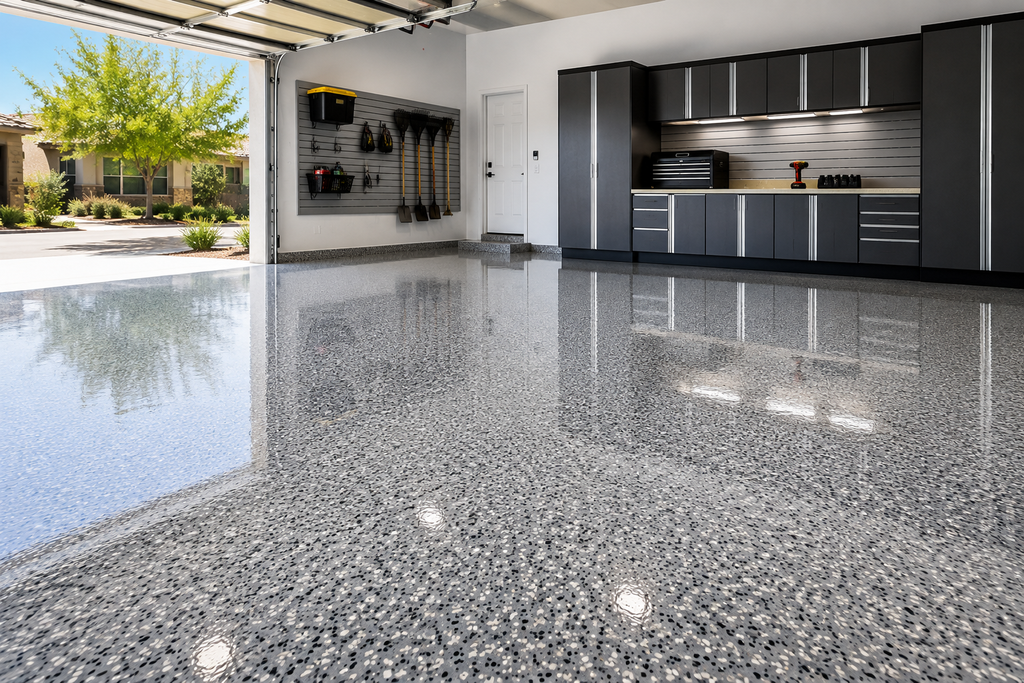
Epoxy flooring is a specific type of resin flooring made by combining epoxy resin with a hardening agent. Once mixed, a chemical reaction kicks off that turns the liquid into a rigid, plastic-like surface that bonds tightly to concrete.
This is the coating you’ve probably seen on garage floors, auto shops, warehouses, and commercial kitchens across the U.S. It’s popular because it’s tough, resists oil and chemical stains, and can be customized with color flakes, metallic pigments, or a solid gloss finish.
Resin Flooring vs Epoxy Flooring: The Core Relationship
Think of it like this: “resin flooring” is the category, and “epoxy” is one product inside that category — similar to how “SUV” describes a vehicle type, while “Ford Explorer” is one specific model.
That’s the key point people miss when searching for the difference between resin and epoxy flooring. You’re not really comparing two competitors — you’re comparing a broad group to one member of that group. The more useful comparison is epoxy vs. other resin systems (like polyaspartic or polyurethane), which is what the table below covers.
Epoxy Flooring vs Resin Flooring: Side-by-Side Comparison
| Feature | Epoxy Flooring | Other Resin Systems (PU, Polyaspartic, MMA) |
| Cure Time | 8–24 hours per coat | 1–4 hours (polyaspartic/MMA cure much faster) |
| UV Stability | Can yellow over time without a UV topcoat | Polyaspartic and PU resist yellowing naturally |
| Chemical Resistance | Excellent, especially with novolac topcoats | Excellent, varies by resin type |
| Moisture Tolerance | Sensitive unless a moisture-tolerant primer is used | Urethane cement handles damp slabs well |
| Cost | Generally the most affordable option | Typically higher due to faster cure and specialty additives |
| Best For | Garages, warehouses, showroom floors | Fast-turnaround garages, wet/food-processing areas, cold environments |
| Look & Finish | Glossy, deep color, great for metallic and flake designs | Similar finishes, often with better long-term color retention |
Difference Between Resin and Epoxy Flooring: Key Factors to Weigh
1. Chemical Composition
Epoxy uses a two-part resin-and-hardener reaction that creates a dense, hard-wearing plastic layer. Other resin flooring types — like polyaspartic or MMA — use different chemistry that changes how fast they cure and how flexible the finished floor is.
2. Curing Speed
This is where the difference between resin and epoxy flooring really shows up in real-world projects. Standard epoxy needs closer to a full day (or more) between coats. Polyaspartic resin, by contrast, can be walked on the same day, which matters if you can’t shut down a garage or commercial space for long.
3. Durability and Traffic
Both epoxy and other resin systems hold up well under daily foot and vehicle traffic. Epoxy tends to be harder and more scratch-resistant, while polyaspartic and polyurethane resin systems flex slightly more, which helps them resist cracking in spaces with temperature swings.
4. UV and Weather Exposure
Standard epoxy is not naturally UV-stable — direct sunlight can cause it to amber or fade over time unless it’s topped with a UV-resistant sealant. Polyaspartic resin is UV-stable out of the box, which is a big reason it’s popular for outdoor patios, driveways, and sun-exposed garages across warmer U.S. states.
5. Cost Considerations
Epoxy flooring is usually the most wallet-friendly resin flooring option upfront, which is why it remains the go-to choice for residential garages and commercial buildings. Other resin systems can cost more per square foot but may save money long-term through faster installation and fewer recoats.
Where Each System Works Best
- Residential garages: Epoxy flooring is still the top pick for most homeowners thanks to its price point and wide range of finishes — from solid colors to decorative chip blends and metallic designs.
- Commercial kitchens and food plants: Urethane cement or polyaspartic-topped systems handle moisture, heat, and heavy cleaning chemicals better.
- Showrooms and retail floors: Metallic epoxy or high-gloss resin systems create a showroom-quality finish that looks polished under lighting.
- Outdoor patios and driveways: Polyaspartic resin systems resist UV fading and handle temperature swings better than standard epoxy.
- Warehouses and industrial floors: Heavy-duty epoxy or resin quartz systems stand up to forklift traffic, chemical spills, and constant wear.
If you’re trying to decide between an epoxy garage floor and a full resin system for a commercial or industrial space, a local flooring contractor can walk the site and recommend the right build based on moisture readings, expected traffic, and climate.
Final Takeaway
When it comes to epoxy flooring vs resin flooring, remember this: epoxy is a resin flooring system, not a competing category. The real decision isn’t “epoxy or resin” — it’s which resin system (epoxy, polyaspartic, polyurethane, or urethane cement) fits your space, budget, and climate. For most residential garages, a properly installed epoxy floor still delivers the best balance of cost and durability, while commercial and outdoor spaces often benefit from faster-curing, UV-stable resin alternatives.
If you’re in Arizona and comparing your options, First Class Coatings’ residential epoxy flooring services and commercial epoxy flooring solutions can help you figure out which system — epoxy or another resin build like polyaspartic floor coating — makes the most sense for your project. You can also browse decorative chip and metallic epoxy finishes, or check out more flooring guides on the Coatings Tips blog.
Common Questions About Epoxy and Resin Flooring
Is epoxy flooring the same as resinous flooring?
Not exactly. Epoxy flooring is one type of resinous flooring. “Resinous flooring” is the broader industry term that includes epoxy along with polyurethane, polyaspartic, and MMA systems.
Which lasts longer, epoxy or resin flooring?
A well-installed epoxy floor can last 10–20 years with proper care. Some resin systems, like polyaspartic or urethane cement, can match or exceed that lifespan, especially in high-moisture or high-UV environments where standard epoxy struggles.
Can I install resin or epoxy flooring myself?
DIY kits exist for small residential spaces, but professional installation is strongly recommended for garages, patios, and commercial floors. Proper surface prep — grinding, moisture testing, and crack repair — makes the biggest difference in how long the floor actually lasts.
Does epoxy flooring crack in extreme heat or cold?
Standard epoxy can become brittle in extreme temperature swings if it’s applied too thin or without proper prep. Polyaspartic and polyurethane resin systems tend to flex more, which helps them resist cracking in climates with big seasonal temperature changes.
How much does epoxy or resin flooring cost per square foot?
Pricing depends heavily on region, surface prep needs, and system type, but residential epoxy projects typically run in the mid-single digits per square foot, while specialty resin systems and heavy commercial builds cost more due to material and labor.