
Epoxy flooring is a seamless floor coating made by mixing epoxy resin with a hardener. Once those two ingredients meet, they cure into a hard, glossy surface that shrugs off stains, chemicals, and constant foot or vehicle traffic. That’s why so many homeowners and business owners across the U.S. put it in garages, basements, patios, warehouses, and commercial kitchens — it holds up, it’s low-maintenance, and it comes in more colors and finishes than you’d expect. A properly installed epoxy floor coating can last 10 to 20 years, and in a hot climate like Phoenix, the right system can go even longer. If you’re typing “epoxy flooring near me” into Google right now or comparing a stack of quotes, stick around — this guide walks through every type, every benefit, and the actual installation steps, so you know exactly what you’re paying for.
What Is Epoxy Flooring?
So, what is epoxy flooring, exactly? At its core, it’s a resin-based coating system applied over concrete, wood, or tile. There are two parts to it: liquid epoxy resin and a chemical hardener. When a contractor mixes the two together, a reaction kicks off, and that reaction hardens the mixture into a rigid, almost plastic-like layer that bonds tightly to whatever’s underneath.
That’s the epoxy flooring meaning in the simplest terms — a liquid that turns into a solid, protective shield for your floor. Paint just sits on top of a surface. Epoxy actually soaks into the concrete’s pores and bonds there, which is a big part of why it holds up so much better under heavy use.
People in the flooring industry use “epoxy floor coating” and plain old “epoxy” pretty much interchangeably. Whether it’s a two-car garage in the suburbs or a 50,000-square-foot warehouse floor, the underlying chemistry doesn’t change.
Not sure which type actually fits your project? A local expert in epoxy flooring in Phoenix can walk you through samples and point you toward a system based on your garage size, sun exposure, and how the space gets used day to day.
Why People Choose Epoxy Flooring
Before getting into types and uses, here’s a quick rundown of what makes epoxy flooring stand out:
• Seamless, non-porous surface — no grout lines to scrub
• Resists oil, grease, chemicals, and hot tire marks
• Handles heavy foot and vehicle traffic without cracking
• Comes in solid colors, metallics, flakes, and custom designs
• Reflects light, which brightens up garages and warehouses
• Lasts a lot longer than tile, laminate, or bare concrete
Types of Epoxy Flooring
There isn’t just one kind of epoxy floor coating. Contractors pick from several types of epoxy flooring depending on the space, how much traffic it sees, and the budget. Here’s a breakdown of the most common epoxy flooring types used in homes and businesses across the U.S.
| Type of Epoxy Flooring | Best For | Key Feature |
| Self-Leveling Epoxy | Garages, showrooms, kitchens | Smooths out cracks and uneven concrete |
| Self-Dispersing Epoxy | Warehouses, industrial floors | Handles heavy machinery and chemical exposure |
| Epoxy Mortar Flooring | Damaged or worn concrete | Extremely impact-resistant, repairs floors |
| Quartz-Filled Epoxy | Hospitals, schools, retail spaces | Decorative, slip-resistant, easy to sanitize |
| Anti-Static Epoxy | Data centers, labs | Dissipates static electricity |
| Epoxy Flake (Chip) Flooring | Garages, basements, patios | Textured, hides dust, adds slip resistance |
| Metallic Epoxy | Living rooms, showrooms | Marbled, 3D shimmer effect |
| Epoxy Terrazzo | High-traffic commercial floors | Marble/granite chip finish, very durable |
| 100% Solids Epoxy | Garages, industrial floors | Thickest, most durable, professional-grade |
| Water-Based Epoxy | DIY-friendly residential jobs | Lower odor, easier application |
Now let’s take a closer look at each of these epoxy flooring types and where they actually work best.
1. Self-Leveling Epoxy Flooring
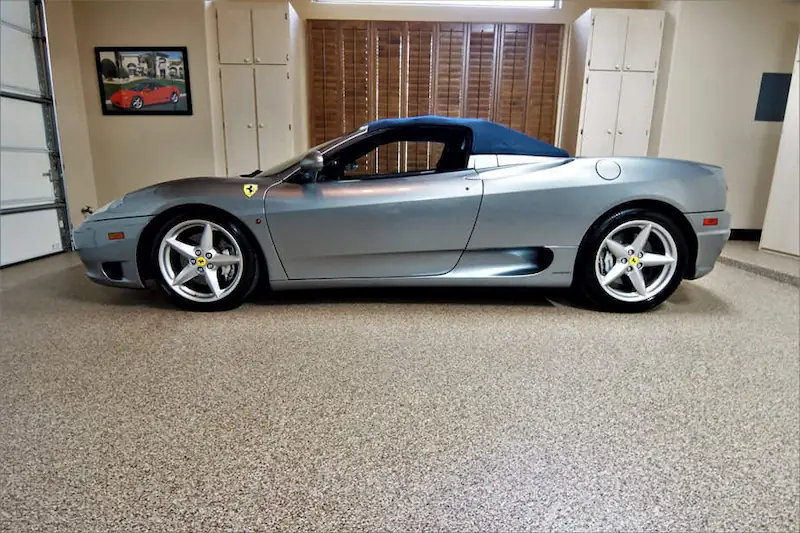
This type spreads out on its own into a smooth, even layer, which is exactly why it’s such a good match for concrete with minor cracks, dips, or wear. Garages, retail showrooms, kitchens — anywhere a flawless, flat finish actually matters — tend to go this route.
2. Self-Dispersing Epoxy Flooring
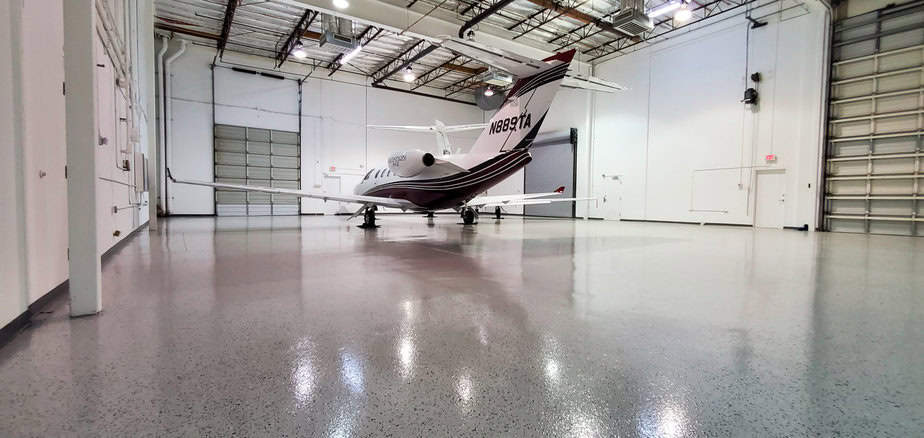
Built for the heavy-duty stuff. Self-dispersing epoxy can take constant foot traffic, forklifts, and chemical spills without flinching, which is exactly why warehouses and industrial facilities lean on it for the long haul.
3. Epoxy Mortar Flooring
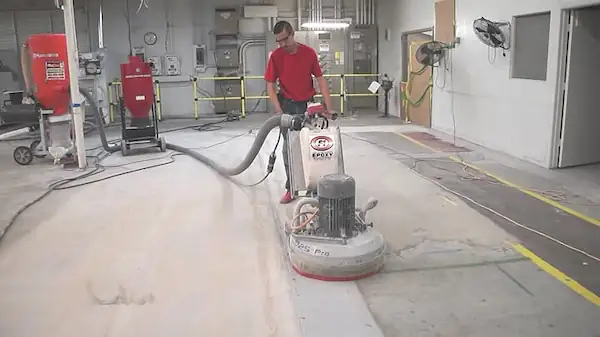
Blend epoxy resin with sand or other aggregates and you get the toughest option on this list. It’s often the go-to for repairing damaged concrete before a final coat goes down, especially inside manufacturing plants.
4. Quartz-Filled Epoxy Flooring
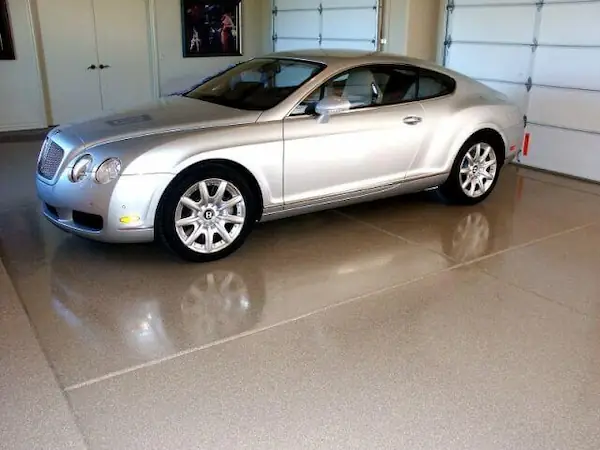
This one mixes colored quartz granules into the epoxy resin, so you end up with a decorative, slip-resistant finish. Hospitals, schools, and retail spaces gravitate toward it because it checks both boxes — looks good and stays safe.
5. Anti-Static Epoxy Flooring
Made for spaces full of sensitive electronics. Anti-static epoxy has conductive materials mixed in that dissipate static charges, and you’ll usually find it in data centers, labs, and cleanrooms.
6. Epoxy Flake (Chip) Flooring
Decorative flakes get tossed into the wet coating, which builds texture and a bit of a terrazzo-like look. It’s one of the most requested styles for residential garages, mostly because it hides dust, dirt, and small imperfections between cleanings.
7. Metallic Epoxy Flooring
Metallic pigments swirl through the resin and create this marbled, almost 3D effect. It’s a real showpiece finish — you’ll see it in showroom-style garages, living rooms, and higher-end commercial spaces.
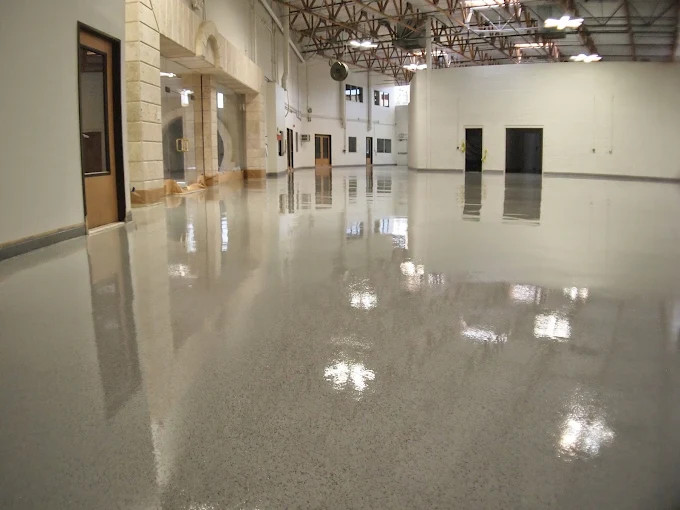
8. Epoxy Terrazzo Flooring
Combine epoxy resin with marble or granite chips and you get a polished, upscale look that still holds up under heavy commercial traffic.
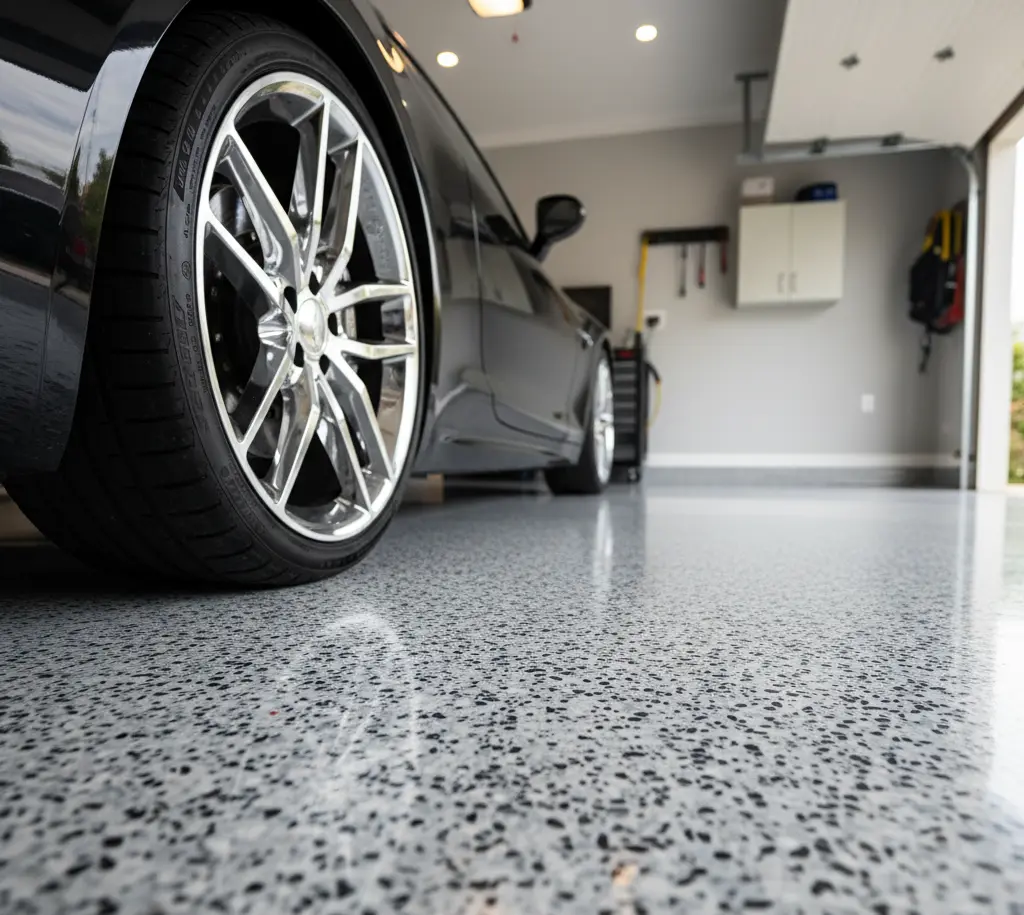
9. 100% Solids Epoxy Flooring
This is as durable and long-lasting as epoxy gets — pure resin, no water, no solvents. It cures into a thick, high-performance layer, but because it cures fast, it generally needs a professional to install it.
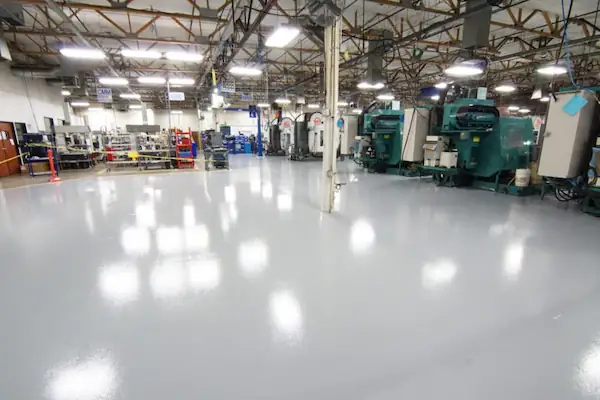
10. Water-Based Epoxy Flooring
A thinner formula with less odor, which makes it easier to apply. That’s why it’s a common pick for smaller residential DIY jobs. It offers decent protection, but it won’t match the durability of a 100% solids system.
Benefits of Epoxy Flooring
Now that the types are out of the way, let’s get into the benefits of epoxy flooring that make it worth the investment.
1. Built to Last
Epoxy floors shrug off scratches, impact, and everyday wear a lot better than bare concrete, vinyl, or laminate. Installed properly, most epoxy floors last 10 to 20 years, and the premium systems can go even further than that.
2. Stands Up to Chemicals and Stains
Oil, brake fluid, cleaning products, de-icing salts — none of it eats into the surface. That’s a big reason garages, workshops, and commercial kitchens keep choosing epoxy.
3. Simple to Clean
Since the surface is seamless and non-porous, dirt, dust, and spills sit on top instead of soaking in. Most of the time, a broom and a damp mop are all you need.
4. Looks Sharp
Glossy or satin finish, dozens of color and pattern combinations — epoxy floor coating options can match just about any style, from a stripped-down garage to a full showroom floor.
5. Improves Safety
Slip-resistant additives like aluminum oxide or silica can get blended right into the topcoat, giving better traction anywhere spills, water, or foot traffic are a concern.
6. Cost-Effective Over Time
Sure, it costs more upfront than a can of paint. But between the long lifespan and the low maintenance, epoxy flooring usually ends up saving money compared to floors that need constant repairs or replacement.
Epoxy Flooring: Pros and Cons at a Glance
| Pros | Cons |
| Extremely durable and long-lasting | Requires proper surface prep — skipping this causes peeling |
| Chemical, oil, and stain resistant | Can be slippery when wet without additives |
| Custom colors, patterns, and finishes | Some formulas can yellow under prolonged UV exposure |
| Seamless and easy to clean | Repairs can be tricky once the floor is damaged |
| Increases resale appeal of garages and shops | Best results need professional installation |
Epoxy Flooring Uses: Where Is It Installed?
One of the most common questions people ask is what epoxy flooring is actually used for. Honestly? Almost anywhere that needs a tough, easy-to-clean floor. Here’s a closer look.
Residential Uses
• Garage floors (still the most popular use in the U.S.)
• Basements
• Patios, driveways, and sidewalks
• Laundry rooms and workshops
First Class Coatings’ Residential Epoxy Flooring services cover all of these spaces, with systems built to handle Arizona’s heat and sun exposure.
Commercial Uses
• Showrooms and retail stores
• Restaurants and commercial kitchens
• Office buildings and lobbies
Industrial Uses
• Warehouses and distribution centers
• Manufacturing plants
• Aircraft hangars
• Chemical and water containment areas
For businesses with heavier demands, the commercial and industrial epoxy flooring systems are built to handle constant traffic, machinery, and chemical exposure.
Healthcare and Institutional Uses
• Hospitals and clinics
• Laboratories
• Schools
Looking for something more decorative and high-end? The metallic epoxy floor coating option is worth a look for living rooms, showrooms, and premium commercial spaces.
How Is Epoxy Flooring Installed?
Installation quality is really what separates a floor that lasts 15+ years from one that peels within months. Here’s the general process a professional crew follows:
- Inspect and Test the Concrete — Contractors check for moisture, cracks, and any existing coatings before they even start.
- Grind or Prep the Surface — Diamond grinding or shot blasting opens up the concrete’s pores so the epoxy can actually bond. This step matters more than almost anything else on this list.
- Repair Cracks and Spalls — Any damage gets patched up so the new coating has a smooth, stable base to sit on.
- Apply the Primer/Base Coat — This layer locks the epoxy into the concrete.
- Add Color, Chips, or Metallics — Depending on the style you picked, flakes or pigments get broadcast into the wet coating.
- Apply the Topcoat — A clear, UV-stable topcoat (often polyaspartic or polyurethane) seals and protects everything underneath.
- Cure Time — Most residential garages can handle light foot traffic within 24 hours, and full vehicle traffic within 24–48 hours, depending on the system and the weather.
DIY vs. Professional Installation
A DIY epoxy kit from a hardware store can work fine for very light-use areas, but it typically uses a thinner, water-based epoxy that isn’t built for hot tires, heavy loads, or long-term durability. Professional installers use commercial-grade, 100% solids epoxy or epoxy/polyaspartic hybrid systems, plus actual grinding equipment — which is exactly why professionally installed floors hold up so much longer, especially somewhere with extreme heat.
Final Thoughts
So, what is epoxy flooring at the end of the day? It’s a durable, customizable, low-maintenance flooring solution that can handle everything from daily garage traffic to industrial chemical exposure. Once you understand the different types of epoxy flooring, the benefits of epoxy flooring, and where it typically gets used, picking the right system for your space gets a lot easier.
If you’re in the Phoenix metro area and ready to move forward, First Class Coatings offers trusted epoxy flooring in Phoenix, backed by over 34 years of experience and 11,000+ completed installations. Take a look at the full color chart, compare residential epoxy flooring and commercial and industrial epoxy flooring options, or reach out for a free on-site estimate to get your project started.
Frequently Asked Questions
What is epoxy flooring made of?
Epoxy flooring comes from two components — epoxy resin and a hardener — that react chemically and cure into a hard, plastic-like surface once they’re mixed and applied.
How long will an epoxy floor last?
A properly installed epoxy floor coating typically lasts 10 to 20 years, sometimes longer, depending on the system, the traffic it sees, and how well it’s maintained. In hotter climates, UV-stable topcoats help it hold up even longer.
Do epoxy floors crack?
The epoxy itself resists cracking pretty well, but it can crack if the concrete underneath shifts, or if the surface wasn’t prepped properly before installation. That’s exactly why professional surface prep — diamond grinding, crack repair — matters so much.
Is epoxy flooring waterproof?
Yes. It forms a seamless, non-porous barrier that keeps water and moisture from soaking through, which is a big reason it works so well in garages, basements, and anywhere spills happen often.
Is epoxy flooring slippery?
It can be when wet, unless a slip-resistant additive like aluminum oxide gets mixed into the topcoat — which is pretty common in garages, patios, and pool-deck areas.
Can epoxy flooring be used outdoors?
Yes — patios, driveways, and sidewalks all work. Just make sure a UV-stable topcoat gets used so it doesn’t yellow over time.