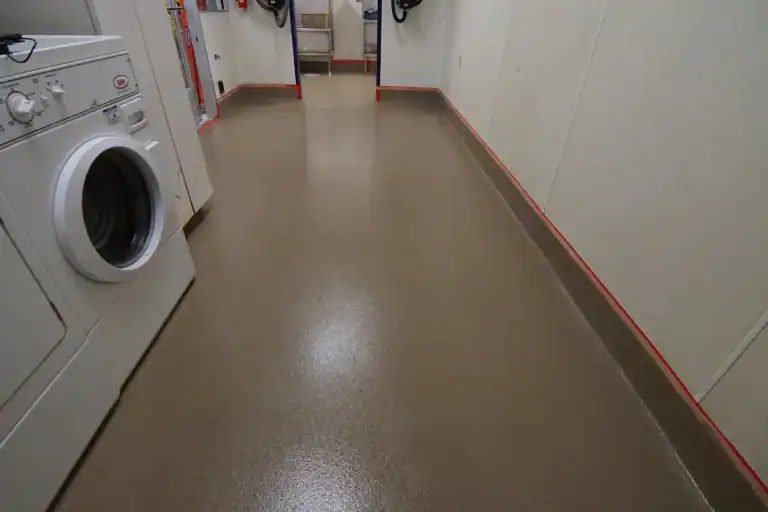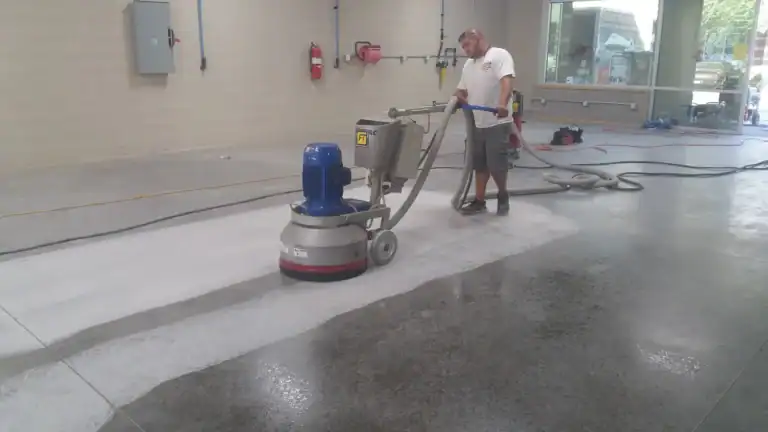

What Is Epoxy Flooring?
Epoxy flooring is a high-performance surface coating created by combining epoxy resin with a hardening agent. When these two components are mixed, they undergo a chemical reaction that forms a rigid, durable, and seamless surface that bonds tightly to concrete.
Unlike traditional paints or sealers, epoxy flooring doesn’t just sit on top of the floor. It chemically adheres to the concrete substrate, creating a protective layer that is significantly stronger and more resistant to wear, impact, and moisture. This is why epoxy is widely used in environments that demand durability, safety, and easy maintenance.
Epoxy floor systems are commonly installed in:
- Residential garages and basements
- Commercial showrooms and retail spaces
- Warehouses and industrial facilities
- Healthcare, laboratories, and food-prep areas
Beyond strength, epoxy flooring is valued for its versatility. It can be customized with decorative flakes, metallic finishes, anti-slip additives, and high-gloss or matte coatings – making it suitable for both functional and aesthetic applications in 2026.
Unmatched Durability & Long Lifespan
One of the biggest reasons epoxy flooring is chosen for both residential and commercial spaces is its exceptional durability. Once cured, epoxy forms a hard, impact-resistant surface that can withstand constant foot traffic, heavy equipment, and daily wear without cracking or peeling.
High Resistance to Impact, Abrasion, and Wear
Epoxy flooring is engineered to handle tough conditions. In garages, warehouses, and showrooms, it resists tire marks, dropped tools, forklifts, and heavy loads far better than bare concrete or traditional floor coatings. This makes it ideal for high-traffic environments where flooring failure can lead to costly repairs and downtime.
Chemical, Oil, and Stain Resistance
Unlike porous concrete, epoxy flooring creates a sealed, non-porous surface. This prevents oils, chemicals, grease, and spills from penetrating the floor. As a result, stains are easier to clean, and long-term surface damage is significantly reduced – an essential benefit for industrial facilities, automotive garages, and commercial kitchens.
Long Service Life Compared to Other Flooring Options
When properly installed and maintained, epoxy flooring can last 10 to 20 years or more, depending on usage and environment. Compared to tile that can crack, vinyl that can peel, or bare concrete that dusts and degrades, epoxy offers a much longer functional lifespan.
This long-term durability translates directly into cost savings. Fewer repairs, minimal resurfacing, and reduced maintenance requirements make epoxy flooring a smart investment rather than a short-term fix.
Durability is the foundation of epoxy flooring’s value – but strength alone isn’t enough. Learn which epoxy flooring option fits your space.
Enhanced Safety for Residential and Commercial Spaces
Safety is a critical consideration in any flooring decision, especially in environments exposed to moisture, heavy traffic, or machinery. Epoxy flooring is designed not only for strength and aesthetics but also to reduce common safety hazards found with traditional flooring surfaces.
Slip-Resistant Options for Wet and High-Traffic Areas
While epoxy floors are often known for their smooth, glossy appearance, they can be customized with anti-slip additives to improve traction. These additives create a textured surface that helps reduce slips and falls, even in wet or oily conditions. This makes epoxy flooring a reliable choice for garages, workshops, commercial kitchens, and industrial facilities where safety risks are higher.
Improved Visibility and Lighting Efficiency
Epoxy flooring often features a high-gloss, reflective finish that enhances ambient lighting. By reflecting light more effectively than bare concrete or darker flooring materials, epoxy floors can improve visibility throughout a space. Better lighting reduces eye strain, highlights potential hazards, and contributes to a safer working environment – particularly in warehouses and large commercial buildings.
Seamless Surface That Reduces Trip Hazards
Unlike tile or other multi-piece flooring systems, epoxy flooring is seamless. There are no grout lines, joints, or uneven edges that can cause tripping hazards. This continuous surface is especially beneficial in facilities that use carts, wheelchairs, or heavy equipment, where smooth movement and stability are essential.
By combining slip resistance, enhanced visibility, and a seamless design, epoxy flooring supports safer day-to-day operations. In the next section, we’ll explore another major advantage of epoxy flooring – its low maintenance requirements and ease of cleaning.
Low Maintenance and Easy Cleaning
One of the most practical benefits of epoxy flooring is how easy it is to maintain. Unlike many traditional flooring options that require frequent repairs, sealing, or deep cleaning, epoxy floors are designed to stay clean and perform well with minimal effort.
Seamless, Non-Porous Surface
Epoxy flooring creates a smooth, seamless surface that does not absorb liquids, dust, or debris. Because there are no grout lines or pores for dirt to settle into, spills remain on the surface and can be wiped away quickly. This makes epoxy an excellent choice for garages, showrooms, healthcare facilities, and commercial spaces where cleanliness is a priority.
Fast and Simple Cleaning Routine
Routine maintenance for epoxy floors typically involves light sweeping and occasional mopping. Stains, oil spills, and chemical residues can usually be removed with mild cleaners, eliminating the need for harsh chemicals or specialized equipment. Compared to concrete floors that generate dust or tile floors that require grout cleaning, epoxy significantly reduces cleaning time and effort.
Reduced Long-Term Maintenance Costs
Because epoxy flooring is resistant to cracking, peeling, and surface damage, it requires fewer repairs over its lifespan. There is no need for frequent resealing, waxing, or replacement, which helps lower ongoing maintenance costs. For both homeowners and business owners, this translates into long-term savings and less disruption to daily operations.
Additional Benefits That Add Long-Term Value
Beyond durability, safety, and low maintenance, epoxy flooring offers several additional advantages that make it a well-rounded flooring solution for both residential and commercial applications. These benefits often play a key role in the final decision-making process, especially for property owners focused on aesthetics, cost efficiency, and long-term performance.
Customizable Design and Aesthetic Appeal
Epoxy flooring is available in a wide range of colors, textures, and finishes. From decorative flake systems and metallic epoxy to solid-color and matte finishes, epoxy can be tailored to match almost any design preference. This versatility makes it suitable for modern garages, retail showrooms, offices, and even living spaces where visual appeal matters as much as function.
Cost-Effective Over the Long Term
While the upfront cost of epoxy flooring may be higher than basic concrete coatings, its long lifespan and low maintenance requirements make it a cost-effective choice over time. Fewer repairs, reduced cleaning expenses, and long replacement cycles contribute to a strong return on investment, especially in high-traffic or commercial environments.
Moisture, Mold, and Dust Resistance
Because epoxy flooring creates a sealed surface, it helps prevent moisture intrusion and concrete dusting. This makes it particularly beneficial in basements, garages, and industrial facilities where moisture control is critical. By limiting mold growth and airborne dust, epoxy flooring also contributes to a cleaner and healthier indoor environment.
Environmentally Friendly Flooring Option
Modern epoxy flooring systems can be formulated with low-VOC materials, helping reduce environmental impact and improve indoor air quality. Additionally, the long lifespan of epoxy floors means fewer replacements and less material waste over time compared to short-lived flooring alternatives. These added benefits further strengthen epoxy flooring’s value proposition.
Cost Comparison and Return on Investment (ROI)
When evaluating flooring options, upfront cost is only part of the decision. Long-term performance, maintenance expenses, and replacement cycles play a much bigger role in determining true value. Epoxy flooring consistently stands out when viewed through a total cost of ownership lens.
Upfront Cost vs Long-Term Value
Epoxy flooring typically has a moderate initial installation cost compared to basic concrete sealers, but it is far more affordable over time than many traditional flooring systems. Its durability and resistance to damage significantly reduce repair and replacement expenses, making it a smart long-term investment.
Flooring Cost and Performance Comparison
| Flooring Type | Average Lifespan | Maintenance Level | Relative Cost Over Time |
|---|---|---|---|
|
Epoxy Flooring |
10–20+ years |
Low |
Low |
|
Bare Concrete |
3–5 years |
High |
Medium – High |
|
Tile Flooring |
8-15 years |
Medium |
Medium |
|
Vinyl Flooring |
5-10 years |
Medium |
Medium-High |
This comparison highlights why epoxy flooring is often chosen for garages, warehouses, and commercial spaces where downtime and maintenance disruptions can be costly.
Strong Return on Investment for Homes and Businesses
For homeowners, epoxy flooring increases usability, improves appearance, and reduces ongoing maintenance costs. For businesses, the ROI is even more pronounced – less downtime, improved safety, easier cleaning, and longer replacement cycles directly impact operational efficiency and long-term savings.
When durability, safety, maintenance, and cost are considered together, epoxy flooring delivers measurable value that few alternatives can match.
Real-World Applications and Use Cases
Epoxy flooring isn’t just a theoretical upgrade – it delivers proven results across a wide range of real-world environments. From residential garages to demanding commercial and industrial spaces, epoxy flooring consistently performs where durability, safety, and cleanliness matter most.
Residential Garages and Basements
In homes, epoxy flooring is most commonly installed in garages and basements. Homeowners benefit from a clean, dust-free surface that resists oil stains, moisture, and tire marks. Epoxy transforms garages into functional extensions of the home – ideal for storage, workshops, home gyms, or parking – while also improving overall appearance and resale appeal.
Commercial Showrooms and Retail Spaces
For showrooms and retail environments, epoxy flooring offers a polished, professional look combined with exceptional durability. High-gloss finishes enhance lighting and product visibility, while the seamless surface handles heavy foot traffic without showing wear. Easy maintenance ensures the space stays clean and presentable with minimal downtime.
Warehouses and Industrial Facilities
Industrial environments demand flooring that can withstand heavy machinery, constant movement, and chemical exposure. Epoxy flooring excels in warehouses, manufacturing plants, and distribution centers by providing impact resistance, chemical protection, and slip-resistant options that support safe and efficient operations.
Healthcare, Laboratories, and Food-Prep Areas
In controlled environments such as healthcare facilities, laboratories, and commercial kitchens, hygiene is critical. Epoxy flooring’s seamless, non-porous surface helps prevent bacteria growth and makes sanitation easier. Its resistance to moisture and chemicals ensures compliance with cleanliness standards while maintaining long-term durability.
Conclusion: Why Epoxy Flooring Is a Smart Long-Term Choice
Epoxy flooring stands out as one of the most reliable and versatile flooring solutions available today. Its combination of exceptional durability, enhanced safety features, and low maintenance requirements makes it suitable for a wide range of residential, commercial, and industrial applications.
Beyond the core benefits, epoxy flooring delivers long-term value through design flexibility, moisture resistance, improved hygiene, and a strong return on investment. When compared to traditional flooring options, epoxy consistently proves to be a cost-effective solution that performs well under heavy use while maintaining a clean, professional appearance.
Whether you’re upgrading a garage, showroom, warehouse, or commercial facility, epoxy flooring offers a balance of performance and aesthetics that few alternatives can match. Understanding these benefits helps ensure you choose a flooring system that not only meets today’s needs but continues to deliver value for years to come.
If you’re considering epoxy flooring for your space, consult with experienced professionals to ensure proper installation, long-lasting performance, and the best results from your investment.
Frequently Asked Questions About Epoxy Flooring
-
What are the pros and cons of epoxy floors?
Pros: Epoxy floors are extremely durable, resistant to stains and chemicals, easy to clean, and visually customizable. They also improve safety with slip-resistant options and offer long-term cost savings.
Cons: Epoxy flooring requires professional installation for best results, needs proper surface preparation, and can be sensitive to UV exposure if not UV-stable. Installation time and curing must also be planned in advance.
-
Is it cheaper to tile or epoxy a floor?
In most cases, epoxy flooring is more cost-effective than tile when considering long-term value. While tile may have a lower upfront material cost, epoxy typically lasts longer, requires less maintenance, and avoids grout repair or replacement expenses.
-
How long will epoxy flooring last?
With proper installation and normal use, epoxy flooring can last 10 to 20 years or more. Commercial and industrial epoxy systems designed for heavy traffic can last even longer with routine maintenance.
-
When should you not use epoxy flooring?
Epoxy flooring may not be ideal for outdoor areas exposed to constant sunlight unless UV-resistant coatings are used. It’s also not recommended for substrates with severe moisture issues unless proper moisture mitigation is performed first.
-
What is the best flooring to put in a garage?
Epoxy flooring is widely considered one of the best garage flooring options due to its resistance to oil, chemicals, moisture, and heavy vehicles. It also enhances appearance and makes cleaning easier compared to bare concrete or tile.
-
Can you sell a house with epoxy floors?
Yes. Epoxy floors are generally viewed as an upgrade, especially in garages and basements. Clean, professionally installed epoxy flooring can improve a home’s appeal and help create a strong first impression for buyers.
-
Is epoxy flooring slippery when wet?
Epoxy floors can be customized with anti-slip additives that significantly improve traction. When properly designed, epoxy flooring can be safer than tile or polished concrete in wet conditions.
-
Is it worth it to epoxy a basement floor?
Epoxy flooring is a great option for basements because it resists moisture, prevents concrete dust, and creates a clean, finished look. It’s especially beneficial for basements used as living spaces, gyms, or storage areas.
-
Does epoxy flooring increase home value?
Epoxy flooring can add value by improving functionality, durability, and visual appeal - particularly in garages, basements, and utility spaces. Buyers often view epoxy floors as a low-maintenance upgrade.