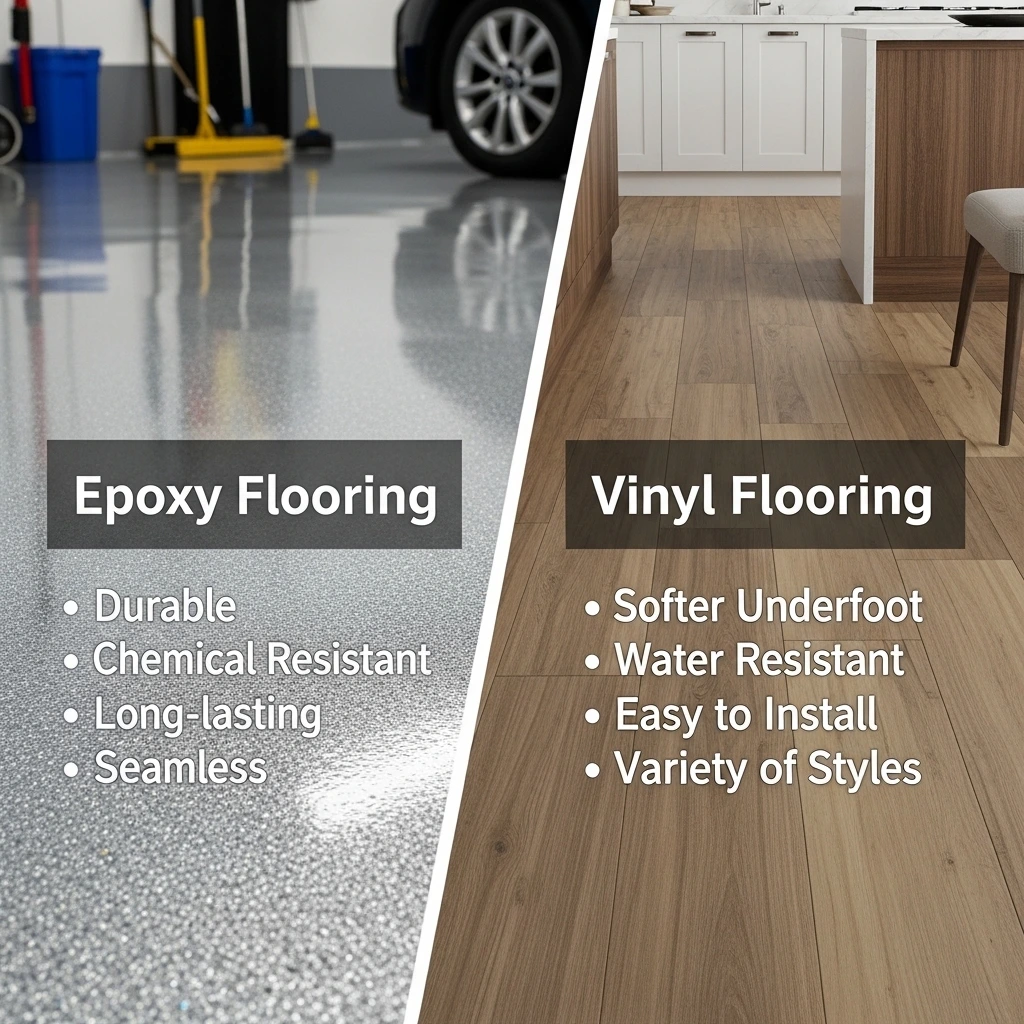
If you need a long-lasting, seamless, and highly durable surface for garages or commercial spaces, epoxy flooring is the better choice. Vinyl flooring is more affordable upfront and comfortable underfoot, making it suitable for residential interiors. For high heat and heavy traffic conditions – like in Phoenix – epoxy typically outperforms vinyl in lifespan and resistance.
What is Epoxy Flooring?
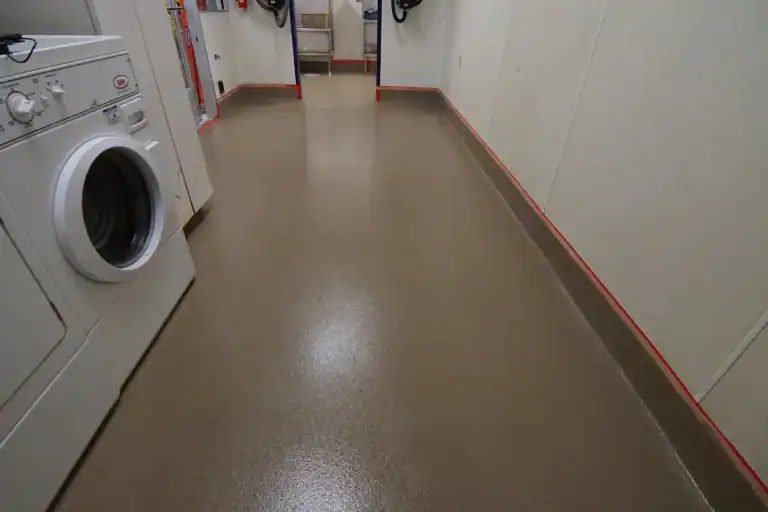
Epoxy flooring is a resin-based coating applied over concrete to create a hard, seamless surface. It bonds directly to the substrate, forming a durable layer that resists stains, chemicals, and heavy impact.
This type of flooring is commonly used in garages, warehouses, and commercial facilities because it can handle high traffic and extreme conditions without peeling or wearing out quickly.
What is Vinyl Flooring?
Vinyl flooring is a synthetic material made from PVC, available in sheets, tiles, or planks. It is designed to mimic wood, stone, or tile while offering a softer and more flexible surface.
Vinyl is widely used in homes due to its affordability, ease of installation, and comfort. However, it relies on adhesives or click-lock systems, which can weaken over time under heavy traffic or heat exposure.
Epoxy vs Vinyl Flooring – Side-by-Side Comparison
| Feature | Epoxy Flooring | Vinyl Flooring |
|---|---|---|
|
Cost (Installed)
|
Higher upfront
|
Lower upfront
|
|
Lifespan |
15–20+ years
|
8–15 years
|
|
Durability |
Excellent (heavy traffic)
|
Moderate |
|
Water Resistance
|
Seamless, highly resistant
|
Water-resistant but seams can fail
|
|
Maintenance |
Low |
Moderate |
|
Heat Resistance
|
High (ideal for hot climates)
|
Can warp under heat
|
|
Best Use
|
Garages, commercial
|
Homes, light-use areas
|
Epoxy is built for performance and longevity, while vinyl focuses on affordability and comfort. The right choice depends on usage, budget, and environment.
Cost Comparison (2026)
Epoxy flooring typically costs more upfront due to surface preparation and professional installation. In Phoenix, most epoxy floors range between $5 to $12 per sq. ft., depending on coating type and condition of the concrete.
Vinyl flooring is more budget-friendly, usually costing $2 to $7 per sq. ft. installed. However, lower durability means replacement may be needed sooner.
Over time, epoxy often delivers better value due to its longer lifespan and minimal maintenance costs.
Durability & Lifespan
Epoxy flooring is highly durable and can last 15–20 years or more with proper installation. It resists heavy loads, impacts, chemicals, and abrasion, making it ideal for garages and commercial spaces.
Vinyl flooring typically lasts 8–15 years. It performs well in low-traffic areas but can scratch, dent, or peel under heavy use.
For high-traffic or industrial environments, epoxy clearly outperforms vinyl in long-term durability.
Installation Process & Timeline
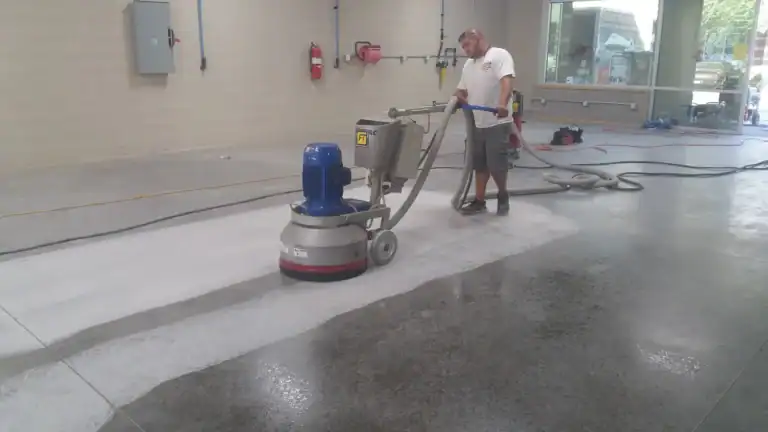
Epoxy flooring requires surface preparation, crack repair, and multiple coating layers. Professional installation usually takes 2–3 days, including curing time.
Vinyl flooring is faster to install. Click-lock or glue-down systems can often be completed in 1–2 days, depending on the area size.
Epoxy demands more preparation but delivers a seamless, permanent finish. Vinyl is quicker but more prone to issues if the subfloor is not perfectly level.
Maintenance & Cleaning
Epoxy flooring is low maintenance. Its seamless surface prevents dust and dirt buildup, and regular sweeping and occasional mopping are enough to keep it clean.
Vinyl flooring requires more attention. Dirt can collect in seams, and harsh cleaners may damage the surface over time.
For busy spaces or commercial use, epoxy is easier and cheaper to maintain long term.
Water, Heat & Moisture Resistance
Epoxy creates a seamless, non-porous surface that resists water, oil, and chemicals. It performs well in hot climates like Phoenix without softening or warping.
Vinyl is water-resistant but not fully waterproof. Moisture can seep through seams or edges, leading to lifting or mold issues over time. Heat can also cause expansion and warping.
For garages and hot environments, epoxy is the more reliable option.
Best Use Cases
Epoxy Flooring:
Garages
Warehouses
Vinyl Flooring:
Bedrooms
Living rooms
Offices with light traffic
Rental properties
Choosing based on use case ensures better performance and lifespan.
Pros and Cons
Epoxy Pros: durable, seamless, long-lasting, chemical-resistant
Epoxy Cons: higher upfront cost, longer install time
Vinyl Pros: affordable, comfortable, easy to install
Vinyl Cons: lower durability, seam issues, shorter lifespan
Final Verdict
Epoxy flooring is the better long-term investment for high-traffic, garage, and commercial spaces, especially in hot climates like Phoenix. Vinyl flooring works well for residential interiors where comfort and budget matter more than durability.
FAQs
-
Is epoxy cheaper than vinyl flooring?
No. Epoxy flooring has a higher upfront cost than vinyl. Epoxy typically costs $5–$12 per sq. ft. installed, while vinyl costs $2–$7 per sq. ft. However, epoxy often lasts longer, making it more cost-effective over time.
-
Are vinyl and epoxy the same?
No. Vinyl and epoxy are completely different flooring types.
- Epoxy is a liquid resin applied over concrete that hardens into a seamless surface.
- Vinyl is a pre-made synthetic material (planks, tiles, or sheets) installed on top of a floor.
-
Can I pour epoxy over vinyl flooring?
No. Epoxy should not be applied over vinyl flooring. Vinyl must be removed first because epoxy needs a clean, porous concrete surface to bond properly. Applying epoxy over vinyl can lead to peeling and failure.
-
Will epoxy melt vinyl?
No, epoxy does not melt vinyl. However, the heat generated during epoxy curing and poor adhesion can damage vinyl or cause it to warp, making it unsuitable as a base layer.
-
How much is vinyl ester compared to epoxy?
Vinyl ester coatings are generally more expensive than standard epoxy, often costing 10–30% more. They offer better chemical resistance and flexibility but are usually used in industrial settings rather than residential flooring.